Mobile accessibility features and sensitive data exposure
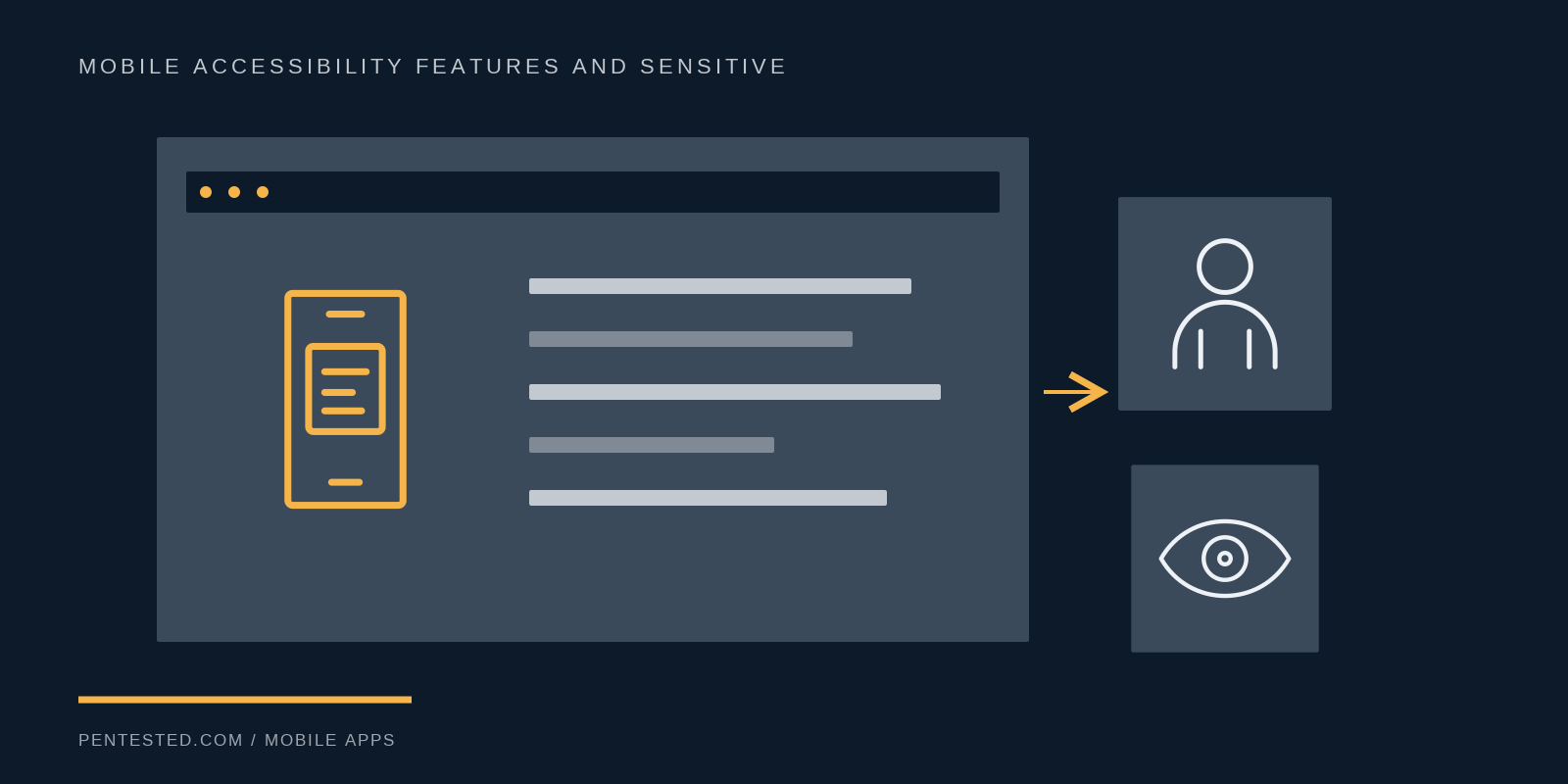
Accessibility services can gain extensive visibility and influence over application interaction. Understanding mobile accessibility features and sensitive data exposure helps establish which security property the feature needs and where that property is actually enforced.
What does this involve?
Browser security is influenced by origins, embedded content, messaging and the way returned data is interpreted. A server can make a correct decision while client-side code later exposes the result to an unintended page or execution context.
Proper masking (e.g., dots instead of input characters) of these codes is essential to protect user privacy. This can be achieved by using appropriate input types that obscure the characters entered by the user. In Jetpack Compose, SecureTextField uses TextObfuscationMode, which by default is TextObfuscationMode.RevealLastTyped, so a developer can simply use SecureTextField without explicitly setting textObfuscationMode unless another behaviour is required.
Accessibility services can read the content of the views an app displays and perform interactions on them. Malware often tricks users into enabling its accessibility service so it can capture typed credentials or one-time codes, read sensitive data shown on screen, or tap buttons such as payment confirmations on the user's behalf.
Why it matters
Consider a realistic failure: a sensitive screen exposes full identifiers through accessibility metadata or event streams.
A browser trust failure can affect signed-in users, private responses or actions taken with a user's session. The assessment should identify the relevant browser behaviour and the server-side permissions that remain in force.
Mobile behaviour can change between a fresh installation, an authenticated session, background activity and a device migration. The assessment needs the actual release and representative supported device states.
How penetration testers check for it
Review accessible text, actions and platform limitations with legitimate accessibility use in mind.
- Exercise the app extensively to trigger as many flows as possible and enter sensitive data wherever you can.
- Inspect the screenshots of the screens that handle sensitive data to determine which views display or accept sensitive information, such as credentials, one-time codes, payment details, or personal information. Match these views with the UI hierarchy of the same screen to determine whether they're protected.
- Trace untrusted data into rendering and navigation.
- Check credentialed requests and sensitive state changes.
How to fix it
Minimise unnecessary exposure while preserving usable and inclusive application behaviour.
- Keep trusted and untrusted content in appropriate contexts.
- Use safe rendering and precisely scoped browser policies.
- Validate messaging origins and intended recipients.
- Retain independent server-side identity and permission checks.
A policy finding needs application context. The absence of a particular header or browser feature is not, by itself, proof that protected data can be accessed.
Recheck the changed behaviour against the original failure conditions and the legitimate user journey. Keep enough evidence to show which release and configuration were verified, and include related entry points that depend on the same security decision.
Related issues
- Sensitive information exposed in mobile screens
- Deep links that expose sensitive mobile functions
- Sensitive mobile data remaining after logout
Read about our methodology or contact pentested.com to discuss your mobile applications.