Android SharedPreferences, Room and DataStore security
Android storage APIs offer different mechanisms without automatically making stored information appropriate to retain. Understanding Android sharedpreferences and room and datastore security helps establish which security property the feature needs and where that property is actually enforced.
What does this involve?
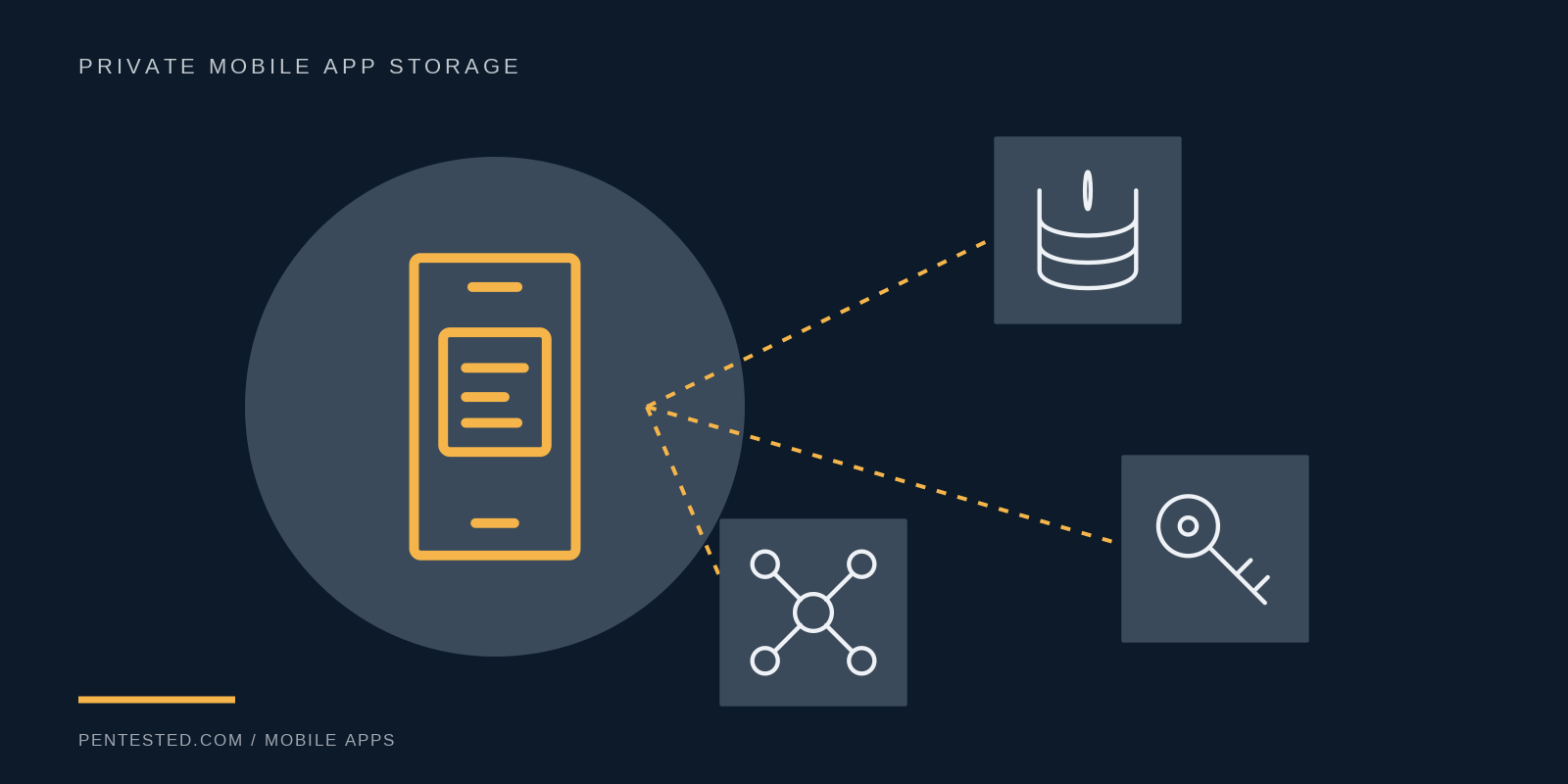
Storage security concerns the copies that remain after an operation has finished. Files, databases, caches and exports can have different access rules and retention periods. A protected main database does not automatically protect a temporary copy or a restored backup.
Why it matters
Consider a realistic failure: a Room database retains private records after account removal.
Exposure can involve private records, reusable credentials or information that identifies a customer. The practical impact depends on which copy is accessible, the access an attacker needs and whether the recovered material remains useful.
Mobile behaviour can change between a fresh installation, an authenticated session, background activity and a device migration. The assessment needs the actual release and representative supported device states.
How penetration testers check for it
Inspect actual preferences, databases and files after normal and exceptional workflows.
- Trace where representative sensitive values are written.
- Compare effective access permissions and relevant device or account states.
- Check temporary copies, exports, backups and deletion behaviour.
- Establish whether recovered information grants any further access.
How to fix it
Minimise stored information and apply appropriate encryption, key protection and deletion.
- Retain only the information needed for the service.
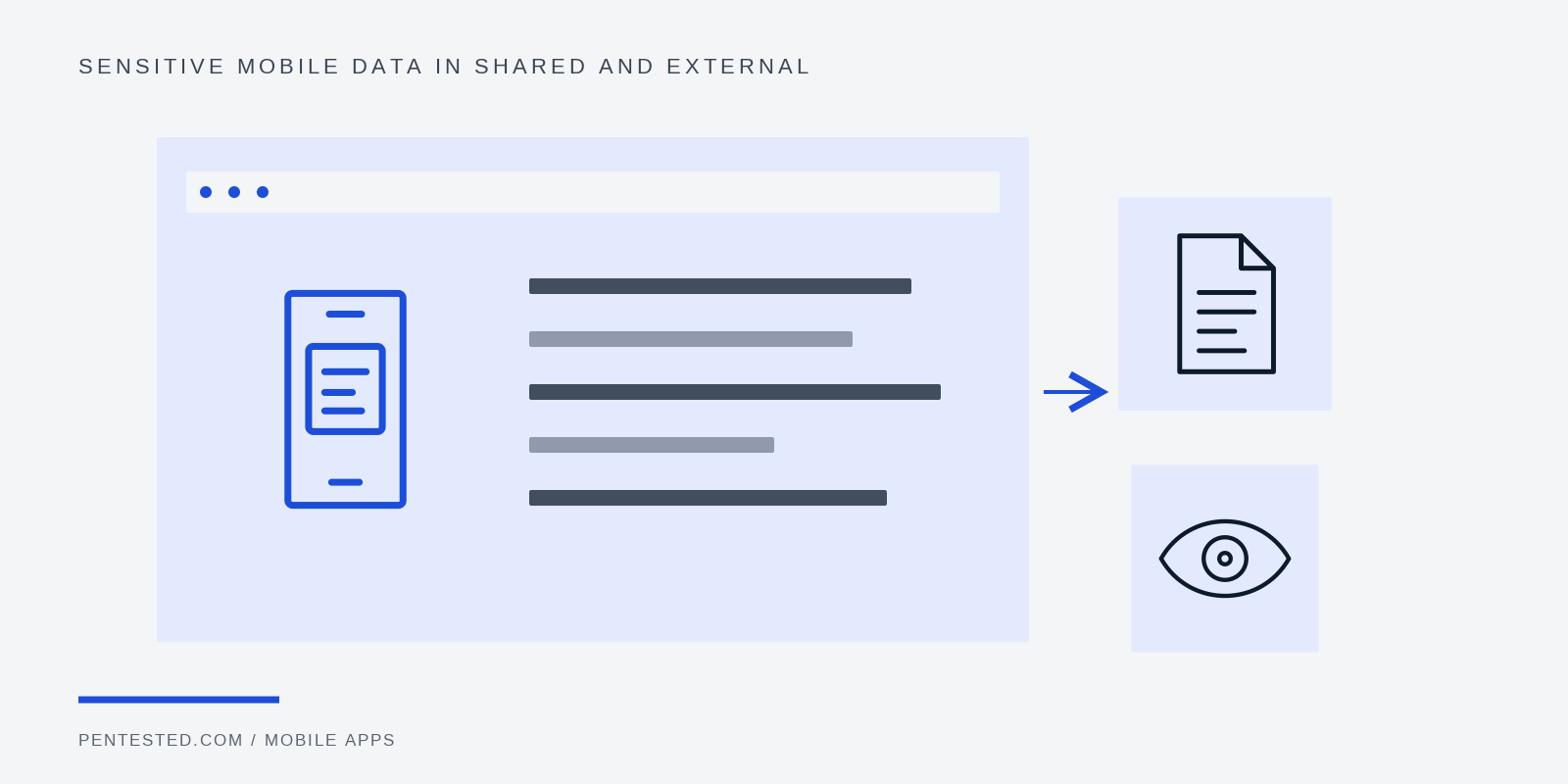
- Separate private working data from deliberately shared content.
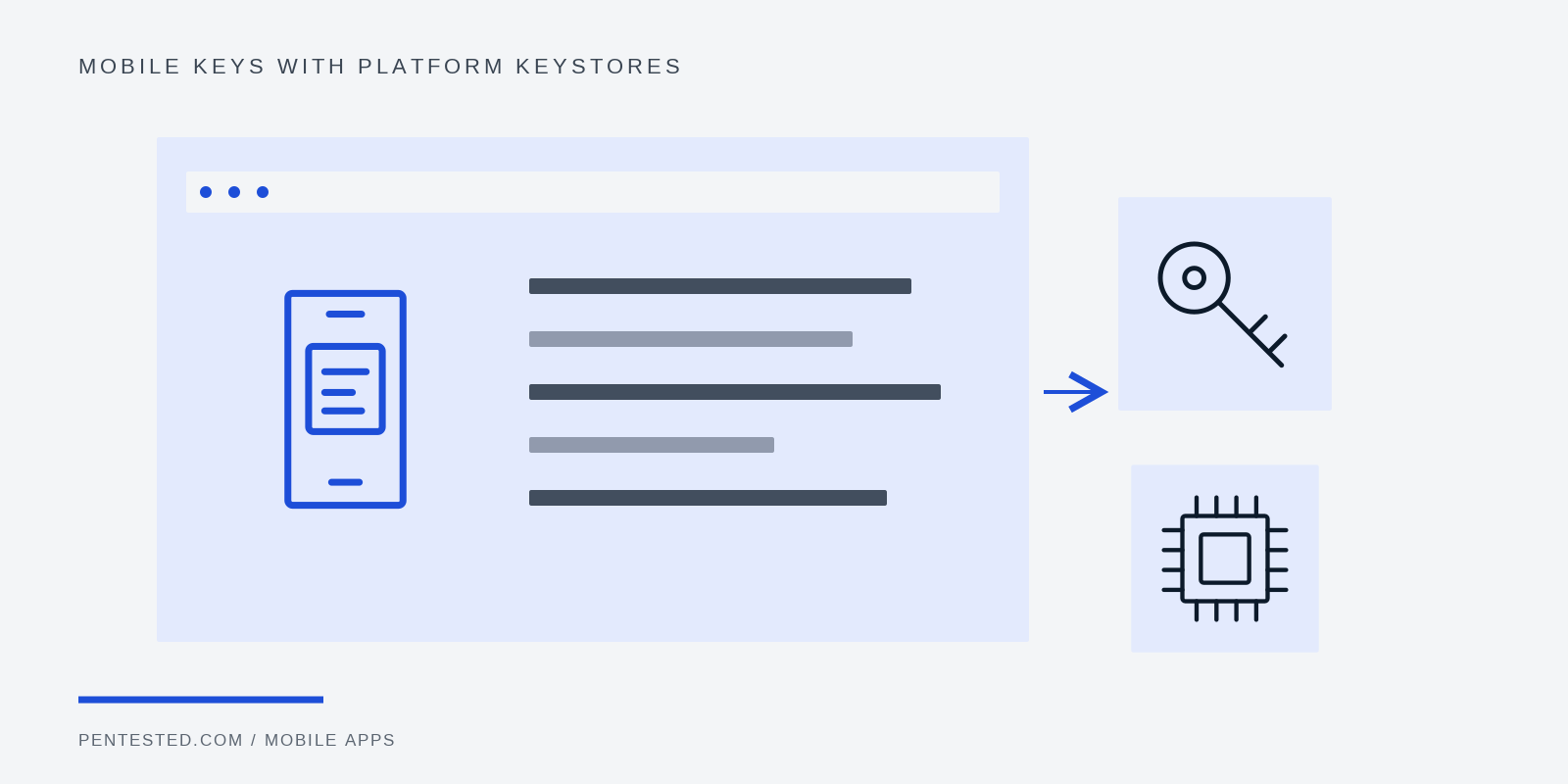
- Protect encryption keys independently of encrypted files.
- Verify removal and recovery behaviour against the intended lifecycle.
Encryption is one part of the design. It cannot compensate for an application that willingly returns plaintext to an unauthorised caller.
Recheck the changed behaviour against the original failure conditions and the legitimate user journey. Keep enough evidence to show which release and configuration were verified, and include related entry points that depend on the same security decision.
Related issues
- Android backup rules and device transfer exclusions
- Android content provider data access and injection risks
- Android Network Security Configuration review
Read about our methodology or contact pentested.com to discuss your mobile applications.