Android content provider data access and injection risks
A content provider is a data service whose URI permissions and queries need deliberate boundaries. Understanding Android content provider data access and injection risks helps establish which security property the feature needs and where that property is actually enforced.
What does this involve?
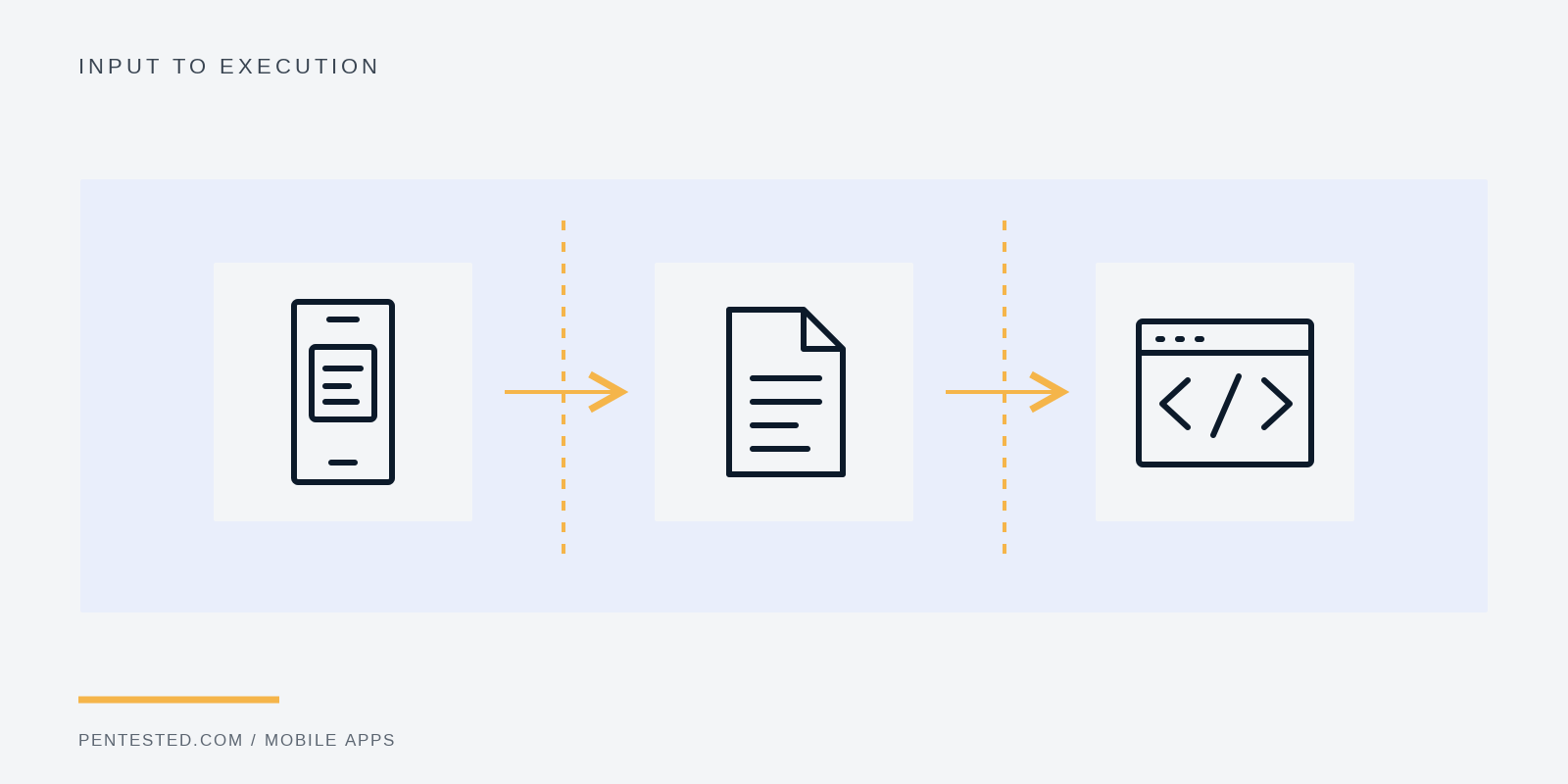
Input validation defines the structures, sizes and meanings an application expects to receive. It must happen before information influences a sensitive operation. Validation does not replace safe interpreter APIs, output encoding or permission checks, because those controls address different boundaries.
Why it matters
Consider a realistic failure: a third-party application reads records through an exported provider.
Untrusted input can change application behaviour, consume excessive resources or reach data and execution paths outside the intended feature. The practical result depends on where the value is used and which privileges are available there.
Mobile behaviour can change between a fresh installation, an authenticated session, background activity and a device migration. The assessment needs the actual release and representative supported device states.
How penetration testers check for it
Test caller permissions, URI grants, path restrictions and query construction.
- Trace input from every relevant entry point to its use.
- Check types, lengths, ranges and ambiguous representations.
- Compare parsing across components and alternate request formats.
- Use controlled invalid inputs to establish effects rather than assumptions.
How to fix it
Keep providers private unless sharing is required and use narrowly scoped grants and safe queries.
- Use explicit schemas and canonical representations.
- Prefer safe parsers and parameterised interpreter interfaces.
- Reject unexpected structures before sensitive processing.
- Apply resource bounds and predictable failure handling.
Blocking a few known attack strings is not a complete validation strategy. The intended data model and downstream interpretation determine which protections are needed.
Recheck the changed behaviour against the original failure conditions and the legitimate user journey. Keep enough evidence to show which release and configuration were verified, and include related entry points that depend on the same security decision.
Related issues
- Android intent spoofing and unintended component access
- Android manifest and exported component security review
- Reviewing content interpretation and browser execution risks
Read about our methodology or contact pentested.com to discuss your mobile applications.