Protecting firmware update transport and download endpoints
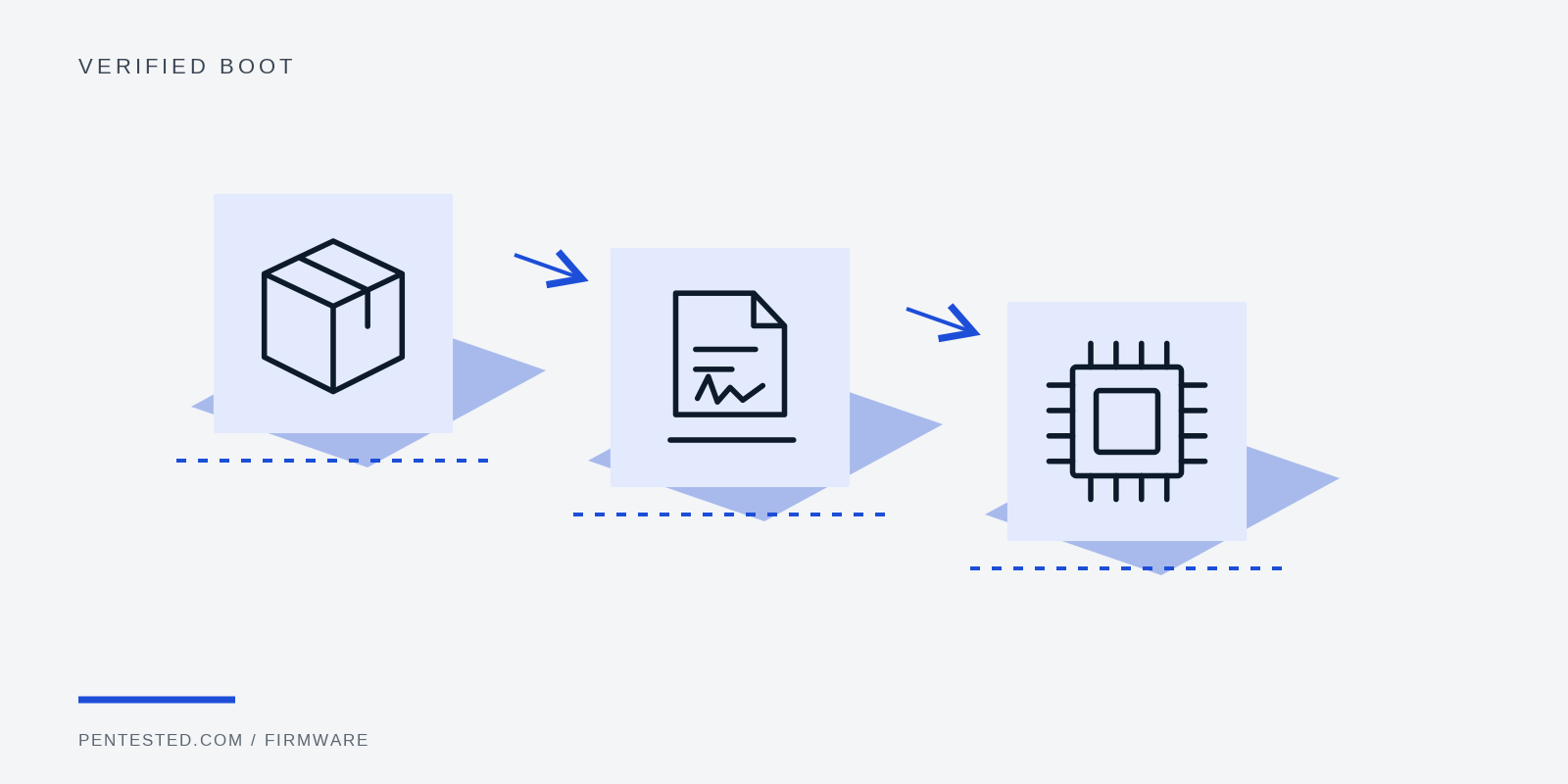
Protected update delivery prevents network intermediaries from substituting or inspecting sensitive traffic. Understanding firmware update transport and download endpoints helps establish which security property the feature needs and where that property is actually enforced.
What does this involve?
An update mechanism grants the ability to change trusted software or configuration. It needs deliberate control over who may initiate the operation, which content is accepted and what happens after failure, interruption or an attempted downgrade.
If the firmware update process is not performed via a secure channel or if no further measures are in place to ensure the confidentiality and to detect modifications of the transmitted data, an attacker with access to the communication channel might be able to interfere with the update process.
If feasible, the firmware update should be performed via a secure channel. Otherwise, proper measures need to be implemented in order to prevent or detect interferences with potential attackers.
Why it matters
Consider a realistic failure: a downloader accepts a certificate for a different update host.
An unauthorised or unsafe update can alter device behaviour for a long period and may affect many installations. Recovery paths can be as important as the normal updater because they often operate under exceptional conditions.
Firmware evidence should identify the image, installed configuration and execution conditions. Static analysis, emulation and hardware testing answer different questions and should support a consistent conclusion.
How penetration testers check for it
Check transport validation, redirects and all update retrieval paths.
- It has to be determined whether the firmware update is performed over a secure channel.
- If the firmware update is performed over an insecure channel, like the internet, it must be checked whether proper measures in regards of confidentiality and integrity are in place.
- If, for example, the communication channel is secured using TLS, it must be checked which cipher suites are supported and if the server certificate is validated by the client.
- Assess modified, invalid and old packages under controlled conditions.
- Review interruption, fallback and recovery behaviour.
How to fix it
Verify server identity and keep cryptographic package verification independent of transport.
- Authenticate the content before installation and use.
- Protect update authority and signing keys.
- Apply a justified version and rollback policy.
- Maintain verified recovery that preserves the intended trust boundary.
Transport encryption and package signatures protect different properties. A safe design should explain its complete authenticity and recovery model instead of relying on one visible protection.
Recheck the changed behaviour against the original failure conditions and the legitimate user journey. Keep enough evidence to show which release and configuration were verified, and include related entry points that depend on the same security decision.
Related issues
- Encryption of firmware update packages
- Firmware update interruption and recovery resilience
- Firmware update signatures and rejection of modified images
Read about our methodology or contact pentested.com to discuss your firmware and embedded systems.