Encryption of firmware update packages
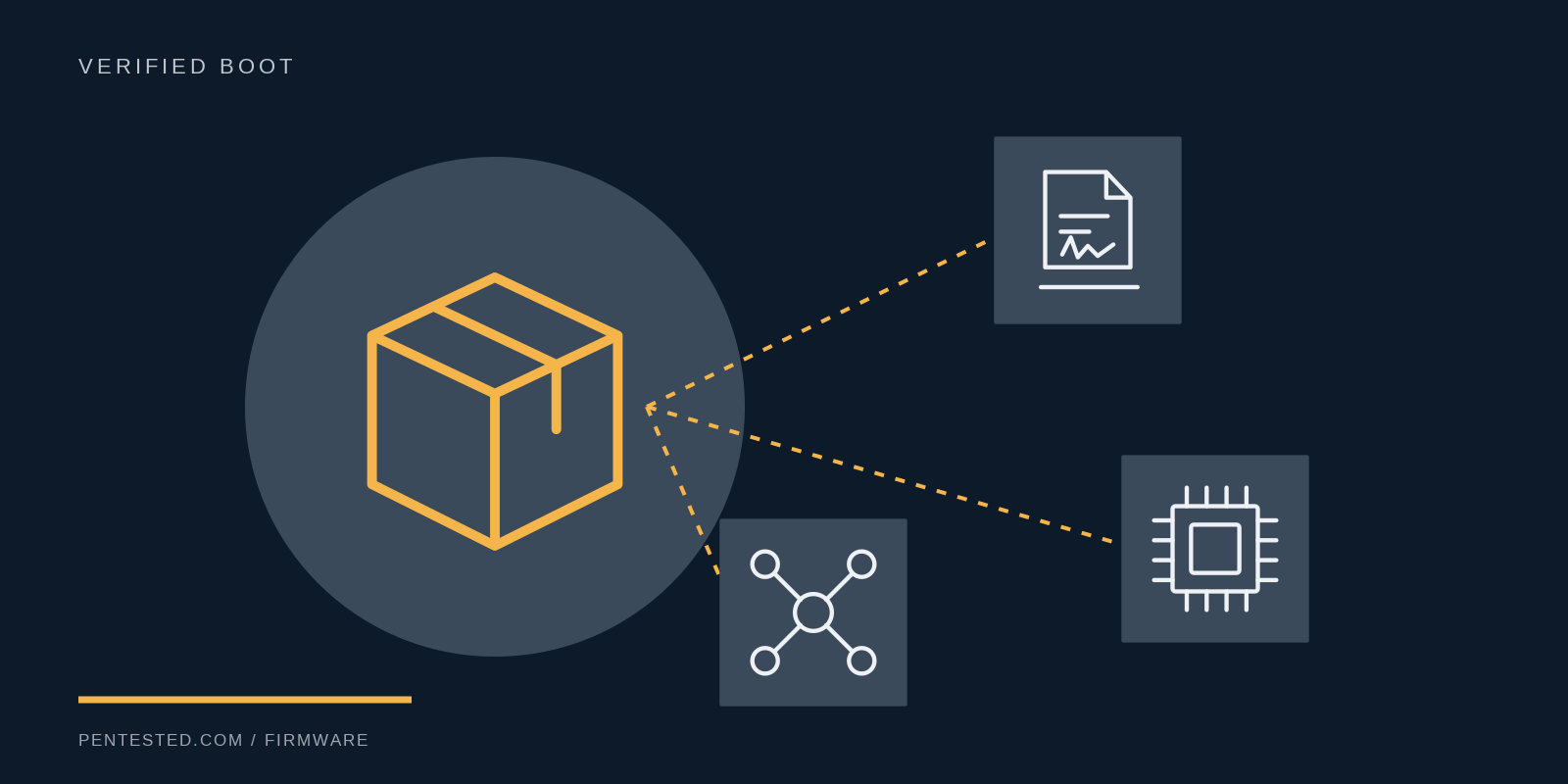
Update encryption protects confidentiality and should not be confused with proof of authenticity. Understanding encryption of firmware update packages helps establish which security property the feature needs and where that property is actually enforced.
What does this involve?
An update mechanism grants the ability to change trusted software or configuration. It needs deliberate control over who may initiate the operation, which content is accepted and what happens after failure, interruption or an attempted downgrade.
Firmware update packages might include confidential data of the soft- and hardware developer, e.g., intellectual property. Hence, it might be required to encrypt the package itself.
Why it matters
Consider a realistic failure: a device decrypts a package and installs it without establishing its trusted origin.
An unauthorised or unsafe update can alter device behaviour for a long period and may affect many installations. Recovery paths can be as important as the normal updater because they often operate under exceptional conditions.
Firmware evidence should identify the image, installed configuration and execution conditions. Static analysis, emulation and hardware testing answer different questions and should support a consistent conclusion.
How penetration testers check for it
Review confidentiality requirements, key distribution and the independent authenticity check.
- It has to be clarified with the firmware developer whether the firmware update package needs to be encrypted.
- If encryption is required, it must be determined whether the package is encrypted.
- Based on ISTG-FW-CRYPT-001, it has to be determined whether proper algorithms were used for encryption.
- Assess modified, invalid and old packages under controlled conditions.
- Review interruption, fallback and recovery behaviour.
How to fix it
Use a standard authenticated design and protect encryption keys according to the product threat model.
- Authenticate the content before installation and use.
- Protect update authority and signing keys.
- Apply a justified version and rollback policy.
- Maintain verified recovery that preserves the intended trust boundary.
Transport encryption and package signatures protect different properties. A safe design should explain its complete authenticity and recovery model instead of relying on one visible protection.
Recheck the changed behaviour against the original failure conditions and the legitimate user journey. Keep enough evidence to show which release and configuration were verified, and include related entry points that depend on the same security decision.
Related issues
- Protecting firmware update transport and download endpoints
- Firmware update signatures and rejection of modified images
- Firmware update interruption and recovery resilience
Read about our methodology or contact pentested.com to discuss your firmware and embedded systems.