Penetration testing and security guides — page 10
How penetration tests work, what the findings mean and how to fix them.
Bias and unequal outcomes in AI application responses
Understand bias and unequal outcomes in AI application responses. Explore realistic risks, testing checks and practical fixes with practical examples.
Unsafe trust in third-party API responses
Understand unsafe trust in third-party API responses. See practical examples, useful verification checks and ways to strengthen the relevant controls.
Documenting browser security assumptions and frontend boundaries
Review browser security assumptions and frontend boundaries. Understand the business impact and the checks that guide an effective fix for developers.

Connecting authorisation decisions to safe application responses
Understand authorisation decisions to safe application responses. Explore realistic risks, testing checks and practical fixes with practical examples.
What firmware artefacts reveal about device internals
Review firmware artefacts reveal about device internals. Understand the business impact and the checks that guide an effective fix for security teams.
Binary hardening weaknesses visible in IoT memory images
Understand binary hardening weaknesses visible in IoT memory images. Explore realistic risks, testing checks and practical fixes in real applications.
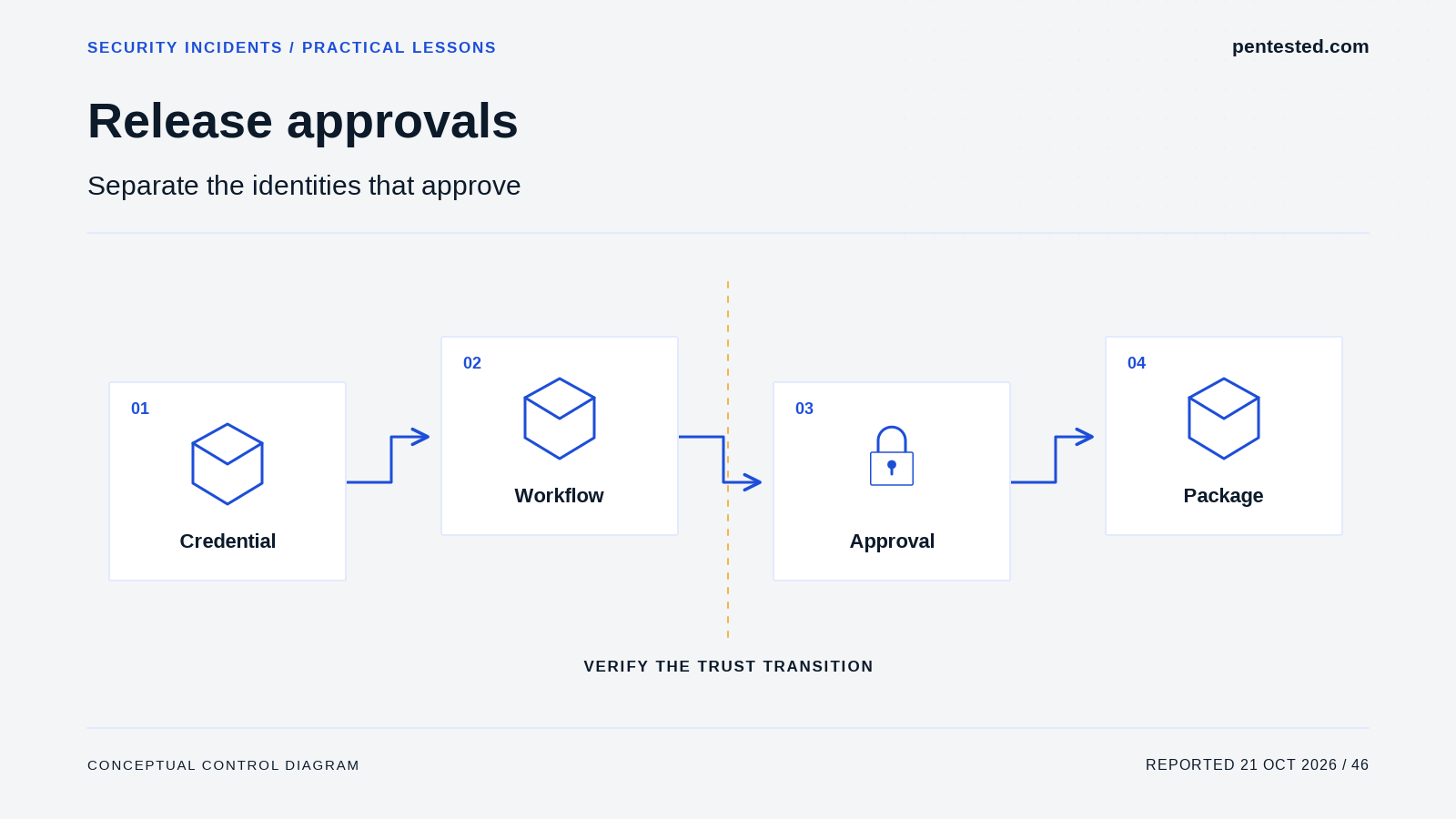
What the October LiteLLM compromise teaches about release provenance
Explore the October LiteLLM compromise and how credential authority, dependent approvals and release controls can undermine trusted package provenance.
Creating trustworthy cryptographic signatures in mobile apps
Explore trustworthy cryptographic signatures in mobile apps. Understand the business impact and the checks that guide an effective fix for developers.

Why web application architecture affects security
See how web application architecture shapes security, how testers map services, and how to limit access between systems that handle sensitive data.