Documenting browser security assumptions and frontend boundaries
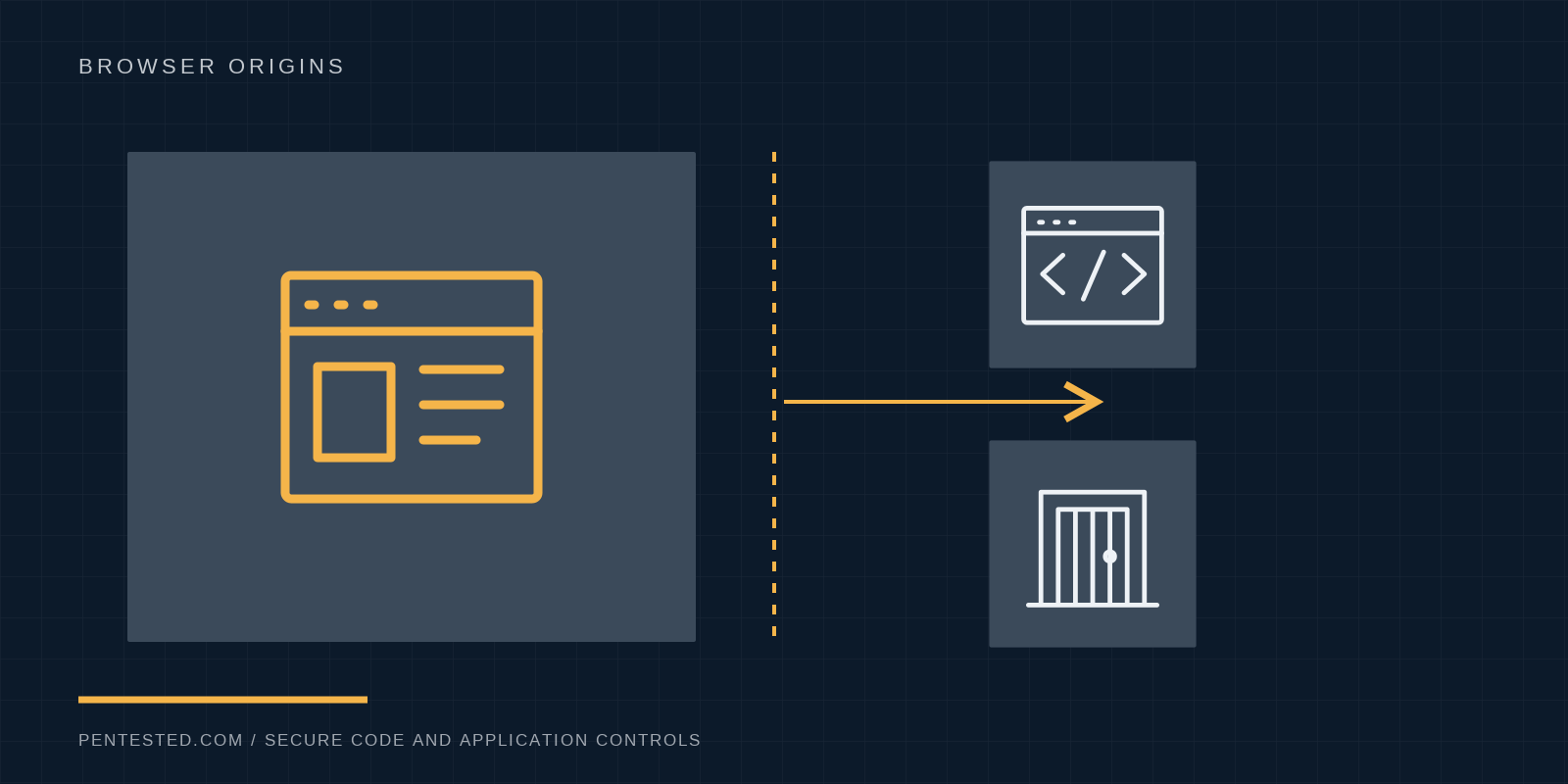
Frontend controls define how the browser separates origins, interprets content and handles information linked to a signed-in user. Understanding browser security assumptions and frontend boundaries helps establish which security property the feature needs and where that property is actually enforced.
What does this involve?
Browser security is influenced by origins, embedded content, messaging and the way returned data is interpreted. A server can make a correct decision while client-side code later exposes the result to an unintended page or execution context.
Why it matters
Consider a realistic failure: a protected page returns private data correctly but exposes it through an unintended rendering, messaging or embedding relationship.
A browser trust failure can affect signed-in users, private responses or actions taken with a user's session. The assessment should identify the relevant browser behaviour and the server-side permissions that remain in force.
A code audit connects a stated requirement to the implementation responsible for enforcing it. Source review and targeted behavioural checks should explain the same boundary and any relevant exceptions.
How penetration testers check for it
Review the specific control expectations below against the code, deployment and observable application behaviour.
- Confirm that application documentation states the expected security features that browsers using the application must support, Content Security Policy (CSP), and other relevant HTTP security mechanisms). It must also define how the application must behave when some of these features are not available.
- Trace untrusted data into rendering and navigation.
- Check credentialed requests and sensitive state changes.
How to fix it
Implement the required boundary in the component that actually performs the sensitive operation and retain focused regression coverage.
- Keep trusted and untrusted content in appropriate contexts.
- Use safe rendering and precisely scoped browser policies.
- Validate messaging origins and intended recipients.
- Retain independent server-side identity and permission checks.
A policy finding needs application context. The absence of a particular header or browser feature is not, by itself, proof that protected data can be accessed.
Recheck the changed behaviour against the original failure conditions and the legitimate user journey. Keep enough evidence to show which release and configuration were verified, and include related entry points that depend on the same security decision.
Related issues
- Documenting security assumptions in application business rules
- Documenting application session boundaries and lifetime policies
- Documenting application security architecture and coding assumptions
Read about our methodology or contact pentested.com to discuss the security of your application code.