Verifying mobile data collection declarations
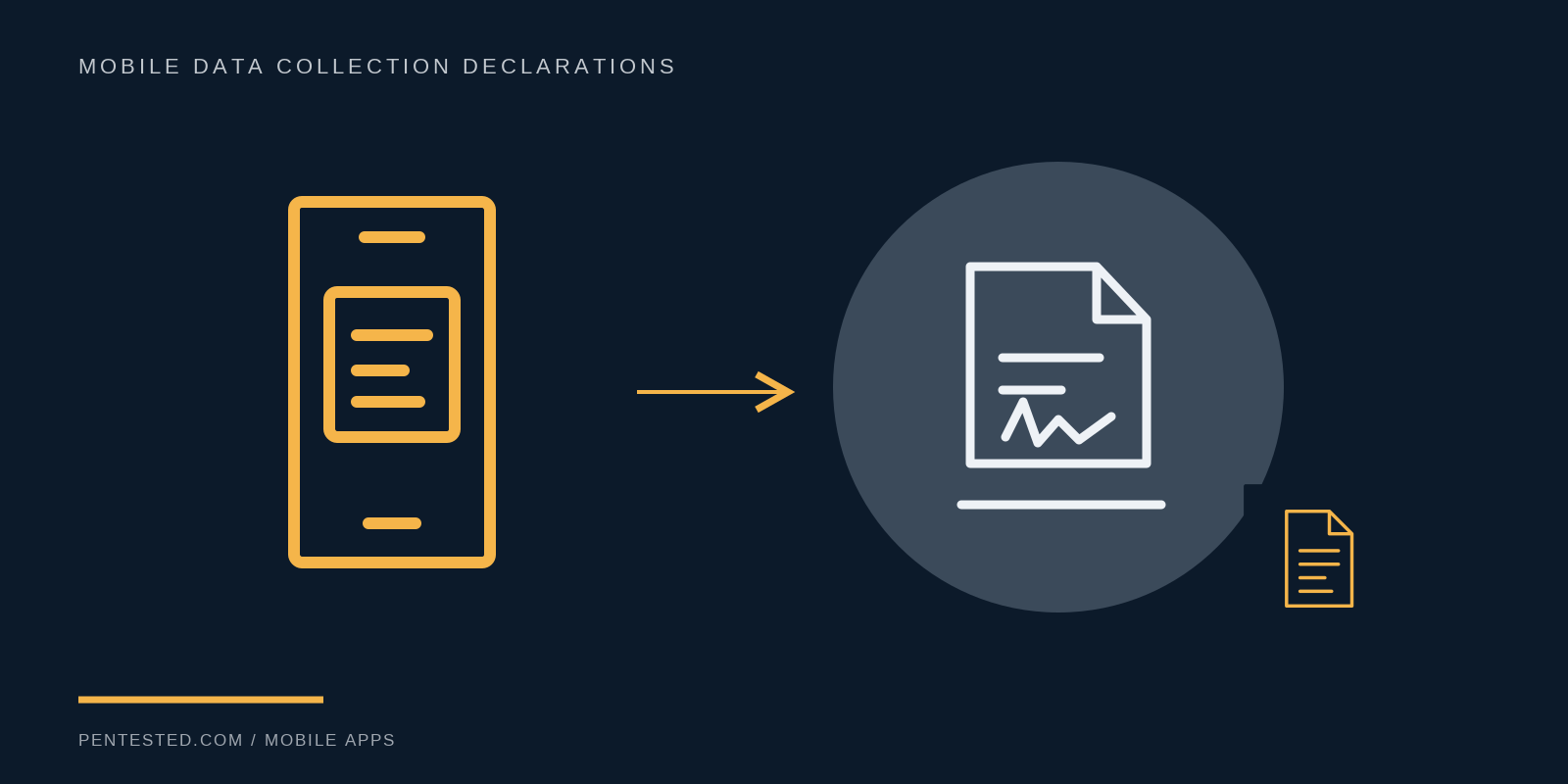
Platform data collection declarations can be inaccurate when SDK behaviour is overlooked. Understanding mobile data collection declarations helps establish which security property the feature needs and where that property is actually enforced.
What does this involve?
Privacy controls need an accurate account of what information is collected, where it goes and how long it remains useful. Interface choices and declarations should match the behaviour of the actual release, including third-party components and background processing.
Why it matters
Consider a realistic failure: a store declaration states no location collection while an embedded library transmits it.
Unexpected collection or ineffective user controls can expose personal information and undermine trust in the service. Technical testing should establish observable data handling and the effect of user choices without promising that a single check proves legal compliance.
Mobile behaviour can change between a fresh installation, an authenticated session, background activity and a device migration. The assessment needs the actual release and representative supported device states.
How penetration testers check for it
Compare declared data categories with runtime behaviour and SDK capabilities.
- Launch and use the app going through the various workflows while inputting sensitive data wherever you can. Especially, places where you know that will trigger network traffic.
- Exercise the app extensively to trigger as many flows as possible and enter sensitive data wherever you can.
- Test refusal, withdrawal, deletion and account transitions.
- Review integrated components and retained copies.
How to fix it
Maintain an evidence-based data inventory and update declarations with each relevant release.
- Collect and retain only what the service needs.
- Use protective defaults and understandable controls.
- Enforce current user choices across relevant data flows.
- Keep the data inventory and public descriptions aligned with releases.
Privacy notices and technical controls work together. Accurate wording cannot fix unnecessary collection, and a configuration flag does not prove that every data recipient follows it.
Recheck the changed behaviour against the original failure conditions and the legitimate user journey. Keep enough evidence to show which release and configuration were verified, and include related entry points that depend on the same security decision.
Related issues
- Verifying signatures before a mobile app trusts data
- Undeclared tracking domains in mobile applications
- Mobile privacy notices that match app behaviour
Read about our methodology or contact pentested.com to discuss your mobile applications.