Undeclared tracking domains in mobile applications
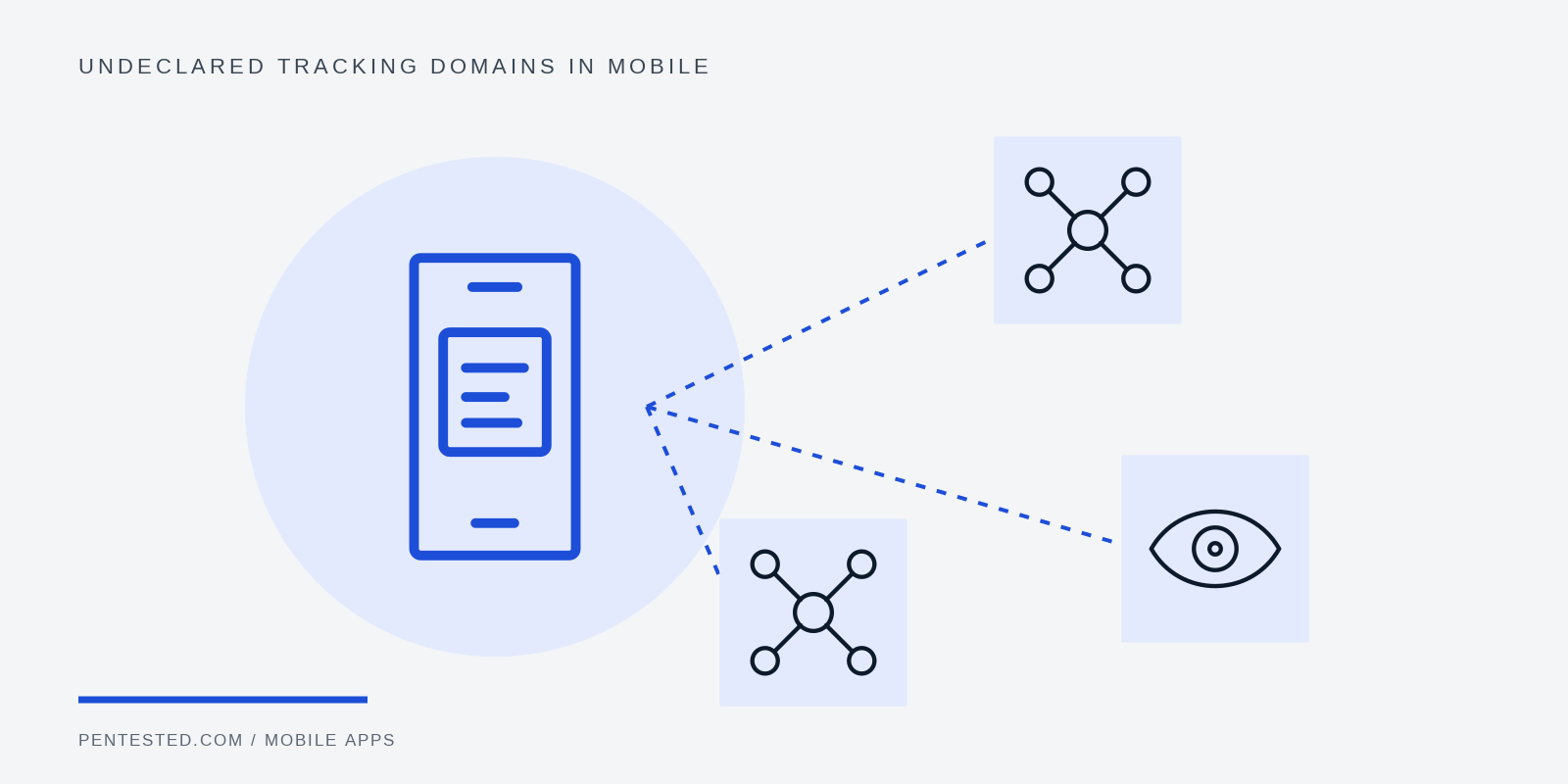
Tracking domain declarations need to reflect the destinations used by the release. Understanding undeclared tracking domains in mobile applications helps establish which security property the feature needs and where that property is actually enforced.
What does this involve?
Privacy controls need an accurate account of what information is collected, where it goes and how long it remains useful. Interface choices and declarations should match the behaviour of the actual release, including third-party components and background processing.
These references can be used to match hardcoded or dynamically accessed domains within your app and verify whether appropriate declarations exist in the Privacy Manifest.
In terms of APIs, you should consider any networking API that allows the app to communicate with external servers, such as URLSession, NSURLSession, NSURLConnection, or third-party networking libraries (e.g., Alamofire, AFNetworking). Additionally, look for references to well-known tracking libraries (e.g., Facebook SDK, Google Analytics) that may indicate the presence of tracking functionality.
Why it matters
Consider a realistic failure: an application contacts an undeclared tracking endpoint after login.
Unexpected collection or ineffective user controls can expose personal information and undermine trust in the service. Technical testing should establish observable data handling and the effect of user choices without promising that a single check proves legal compliance.
Mobile behaviour can change between a fresh installation, an authenticated session, background activity and a device migration. The assessment needs the actual release and representative supported device states.
How penetration testers check for it
Identify actual destinations and compare them with platform privacy configuration.
- DuckDuckGo iOS Trackers: Includes domains, matching rules, descriptions, and categories such as "Action Pixels," "Ad Fraud," "Ad Motivated Tracking," and "Advertising.".
- Exodus Privacy Trackers: Includes tracker names, categories (e.g., "Advertisement," "Analytics," "Profiling"), descriptions, and detection metadata such as network and code signatures.
- The network traffic capture, which you can use to extract all contacted domains during runtime.
- Test refusal, withdrawal, deletion and account transitions.
- Review integrated components and retained copies.
How to fix it
Declare required tracking relationships and remove unnecessary collection and third-party calls.
- Collect and retain only what the service needs.
- Use protective defaults and understandable controls.
- Enforce current user choices across relevant data flows.
- Keep the data inventory and public descriptions aligned with releases.
Privacy notices and technical controls work together. Accurate wording cannot fix unnecessary collection, and a configuration flag does not prove that every data recipient follows it.
Recheck the changed behaviour against the original failure conditions and the legitimate user journey. Keep enough evidence to show which release and configuration were verified, and include related entry points that depend on the same security decision.
Related issues
- Persistent mobile identifiers and unwanted tracking
- Reproducible mobile builds and independent verification
- Verifying mobile data collection declarations
Read about our methodology or contact pentested.com to discuss your mobile applications.