Overlay attacks against mobile app users
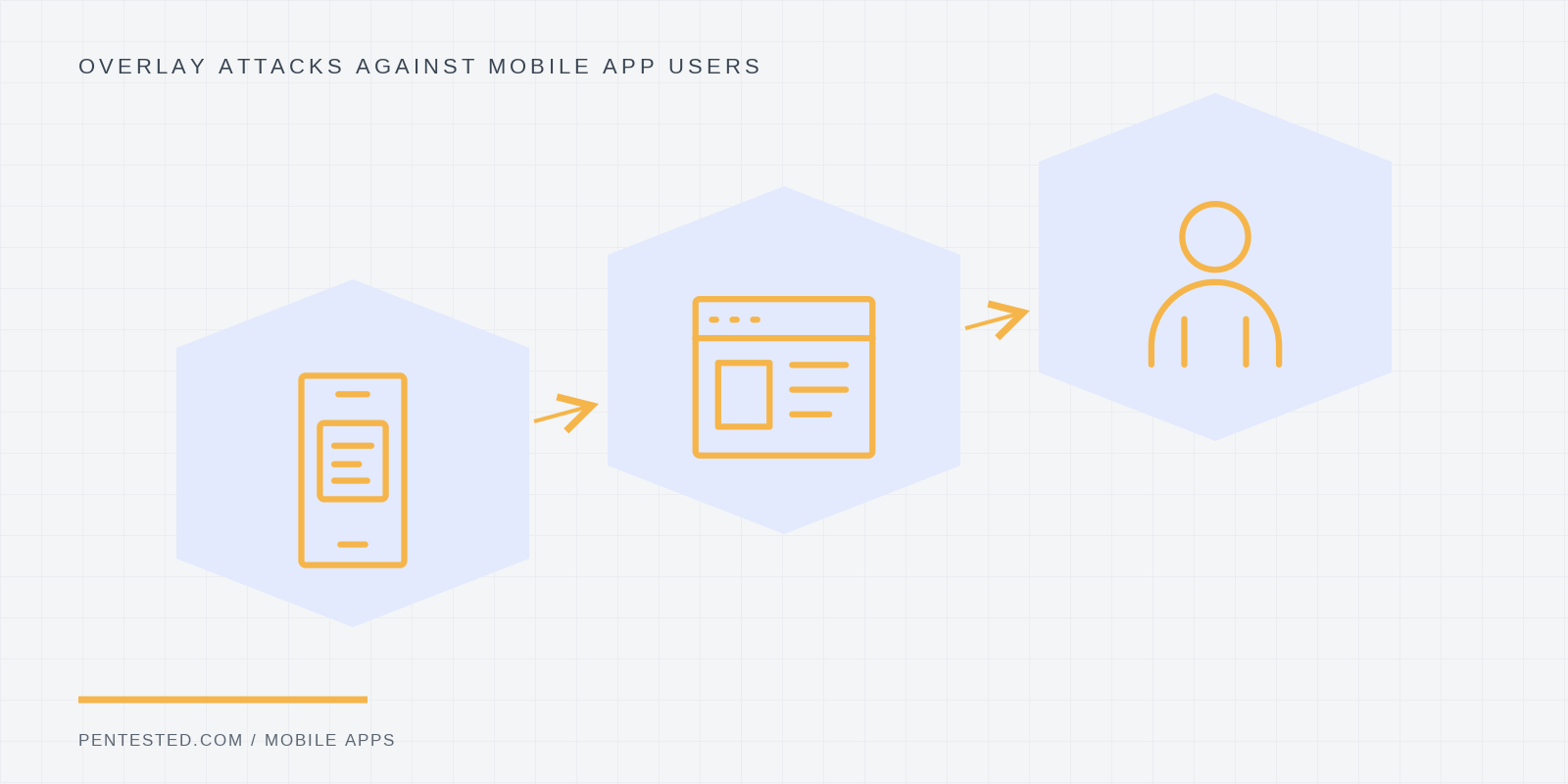
An overlay can change how a user perceives or interacts with a sensitive mobile action. Understanding overlay attacks against mobile app users helps establish which security property the feature needs and where that property is actually enforced.
What does this involve?
Browser security is influenced by origins, embedded content, messaging and the way returned data is interpreted. A server can make a correct decision while client-side code later exposes the result to an unintended page or execution context.
Why it matters
Consider a realistic failure: a misleading overlay covers a confirmation screen while leaving a different button active beneath it.
A browser trust failure can affect signed-in users, private responses or actions taken with a user's session. The assessment should identify the relevant browser behaviour and the server-side permissions that remain in force.
Mobile behaviour can change between a fresh installation, an authenticated session, background activity and a device migration. The assessment needs the actual release and representative supported device states.
How penetration testers check for it
Assess obscured touches and user confirmation under realistic overlay conditions.
- Map trusted origins, embedded resources and messaging relationships.
- Review response policies and actual browser behaviour.
- Trace untrusted data into rendering and navigation.
- Check credentialed requests and sensitive state changes.
How to fix it
Use platform protections for sensitive interactions and clearly bind confirmation to transaction details.
- Keep trusted and untrusted content in appropriate contexts.
- Use safe rendering and precisely scoped browser policies.
- Validate messaging origins and intended recipients.
- Retain independent server-side identity and permission checks.
A policy finding needs application context. The absence of a particular header or browser feature is not, by itself, proof that protected data can be accessed.
Recheck the changed behaviour against the original failure conditions and the legitimate user journey. Keep enough evidence to show which release and configuration were verified, and include related entry points that depend on the same security decision.
Related issues
- Explaining privacy-sensitive mobile actions to users
- Giving users visibility of mobile data use
- Mobile accessibility features and sensitive data exposure
Read about our methodology or contact pentested.com to discuss your mobile applications.