Dynamic code loading risks in mobile applications
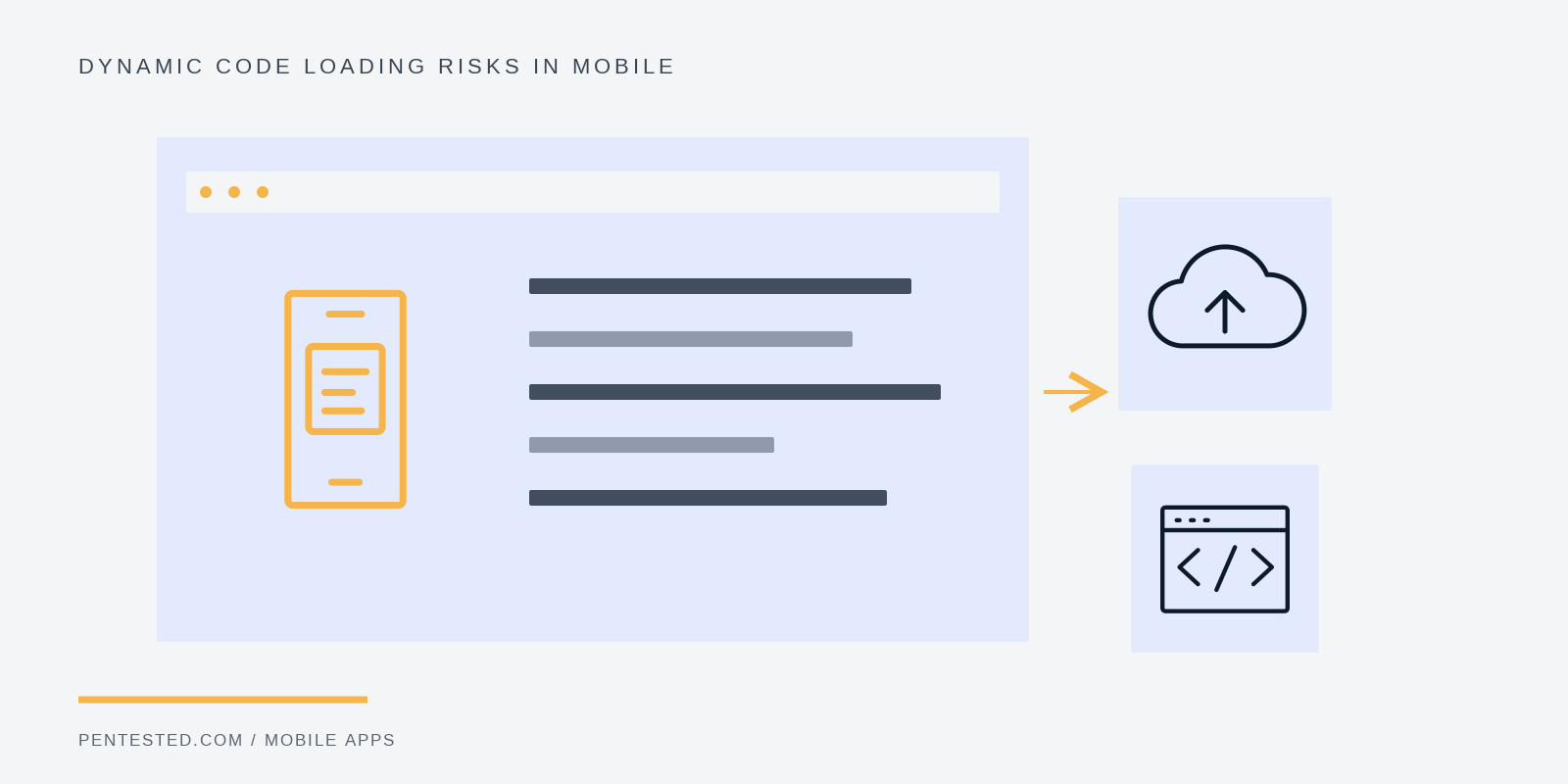
Downloaded executable code can change an app's behaviour after the reviewed package is released. Understanding dynamic code loading risks in mobile applications helps establish which security property the feature needs and where that property is actually enforced.
What does this involve?
A software dependency becomes part of the application's effective behaviour and maintenance commitment. The important inventory is what the release actually contains, including transitive packages, bundled binaries and code that arrives through a build or update process.
Why it matters
Consider a realistic failure: a loader retrieves an unsigned module from an update endpoint.
A compromised or vulnerable component may run with the application's privileges or receive information the business did not expect to share. Impact depends on reachability, permissions and actual data flows rather than a package name alone.
Mobile behaviour can change between a fresh installation, an authenticated session, background activity and a device migration. The assessment needs the actual release and representative supported device states.
How penetration testers check for it
Review code origin, integrity checks, execution context and update permissions.
- Inventory components in real release artefacts.
- Review provenance, integrity and relevant known weaknesses.
- Inspect transitive dependencies and unexpected runtime activity.
- Confirm whether affected code is reachable under realistic conditions.
How to fix it
Avoid unnecessary dynamic loading and authenticate and constrain any required code updates.
- Use maintained and appropriately trusted dependencies.
- Pin and review relevant changes in the delivery process.
- Remove unnecessary components and reduce their permissions.
- Verify remediation in the shipped release and its supporting artefacts.
A vulnerability identifier is a starting point for investigation. Version evidence, affected functionality and deployment conditions determine whether it creates a confirmed application risk.
Recheck the changed behaviour against the original failure conditions and the legitimate user journey. Keep enough evidence to show which release and configuration were verified, and include related entry points that depend on the same security decision.
Related issues
- Compiler hardening for native mobile code
- Security risks from unsupported mobile operating systems
- Checking mobile code integrity at runtime
Read about our methodology or contact pentested.com to discuss your mobile applications.