Debuggable mobile builds and exposed debugging services
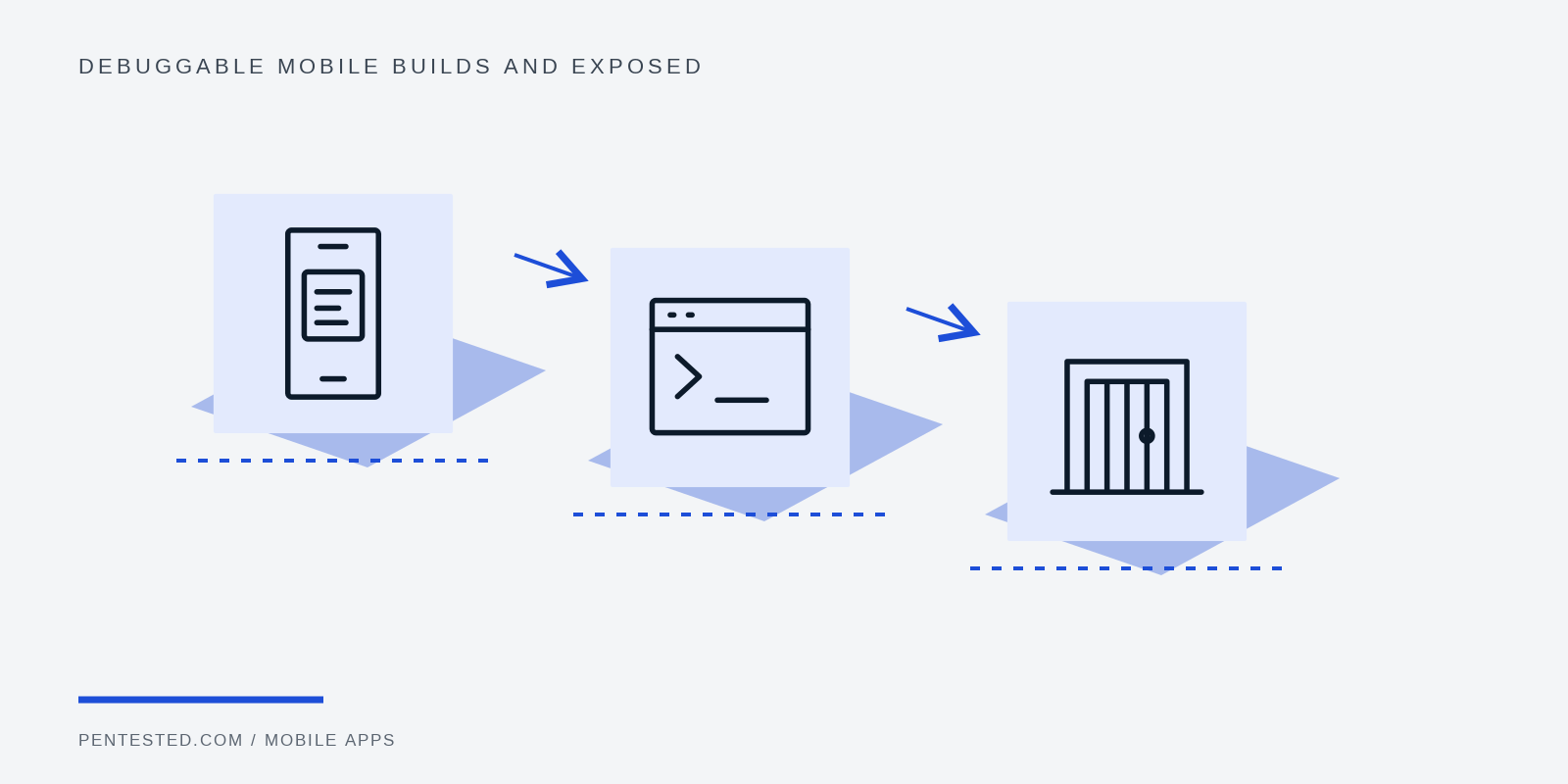
Debug interfaces can expose execution and inspection capabilities that are inappropriate in production. Understanding debuggable mobile builds and exposed debugging services helps establish which security property the feature needs and where that property is actually enforced.
What does this involve?
Resilience measures can make inspection, modification or misuse more difficult under a defined threat model. They are supplementary controls around an application that still needs sound server permissions, protected keys and safe handling of untrusted information.
Although having the debuggable flag set to true is not considered a direct vulnerability, it significantly increases the attack surface by providing unauthorised access to app data and resources, particularly in production environments.
Why it matters
Consider a realistic failure: a released mobile app allows a debugging client to inspect protected application state.
The value of a resilience weakness depends on what analysis or modification enables. Revealing ordinary client code is different from obtaining a privileged credential or making the service trust a forged security decision.
Mobile behaviour can change between a fresh installation, an authenticated session, background activity and a device migration. The assessment needs the actual release and representative supported device states.
How penetration testers check for it
Inspect release flags, entitlements, WebViews and reachable debugging services.
- All locations where WebView.setWebContentsDebuggingEnabled is called with true at runtime.
- Observe the effect on protected operations and server decisions.
- Distinguish increased analysis effort from enforced security boundaries.
How to fix it
Disable unnecessary debugging in production and verify the actual distributed build.
- Remove secrets and unnecessary authority from distributed clients.
- Use proportionate maintained platform protections.
- Bind important assertions to trusted verification.
- Plan safe failure, recovery and legitimate user support.
Root detection, obfuscation and similar measures are not universal requirements for every application. A finding should explain why the particular control matters to the assessed product.
Recheck the changed behaviour against the original failure conditions and the legitimate user journey. Keep enough evidence to show which release and configuration were verified, and include related entry points that depend on the same security decision.
Related issues
- Reproducible mobile builds and independent verification
- Private mobile data exposed in notifications
- Sensitive information exposed in mobile screens
Read about our methodology or contact pentested.com to discuss your mobile applications.