API security misconfiguration and exposed diagnostics
API deployment settings can expose capabilities or information that application code assumes are private. Understanding API security misconfiguration and exposed diagnostics helps establish which security property the feature needs and where that property is actually enforced.
What does this involve?
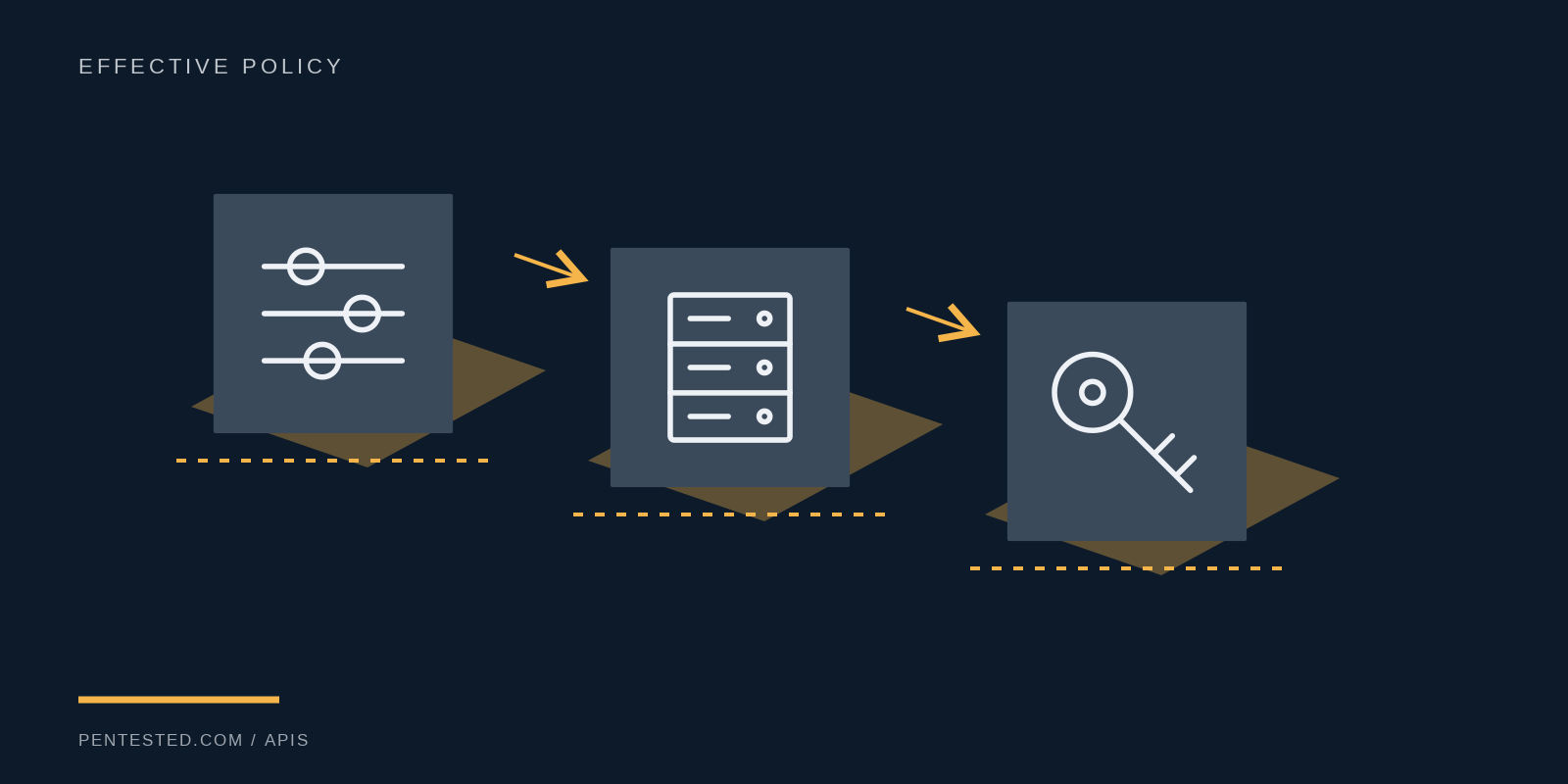
Configuration can change an application's security boundary without changing its business code. Effective production values, inherited defaults, exposed services and operational interfaces need to be assessed together rather than as isolated files.
Why it matters
Consider a realistic failure: a diagnostic endpoint reveals internal service configuration to unauthenticated visitors.
A permissive setting can expose private information or administrative capabilities through a route the application owner did not expect. The consequence depends on how the service is actually deployed and which identities can reach it.
An API review follows the server-side behaviour behind the interface. Direct requests, alternate methods and background operations can reveal boundaries that the normal frontend journey does not exercise.
How penetration testers check for it
Review effective production settings, management routes, errors and cross-origin policies.
- Review effective production settings and inherited defaults.
- Identify exposed management and diagnostic interfaces.
- Trace secret and connection configuration to its use.
- Compare configured policy with observed behaviour.
How to fix it
Apply secure deployment defaults and separately restrict operational interfaces.
- Use explicit secure defaults and controlled exceptions.
- Restrict operational interfaces and service identities.
- Protect secrets and remove unnecessary diagnostic exposure.
- Check configuration drift during deployment and maintenance.
A setting should be interpreted in its environment. A deliberately public resource and an unintended private exposure can look similar until ownership, purpose and reachable operations are established.
Recheck the changed behaviour against the original failure conditions and the legitimate user journey. Keep enough evidence to show which release and configuration were verified, and include related entry points that depend on the same security decision.
Related issues
- API gateway controls and direct backend access
- API cache keys and cross-user data exposure
- Server-side request forgery through API integrations
Read about our methodology or contact pentested.com to discuss your APIs and integrations.