Broken property-level authorisation in API responses and updates
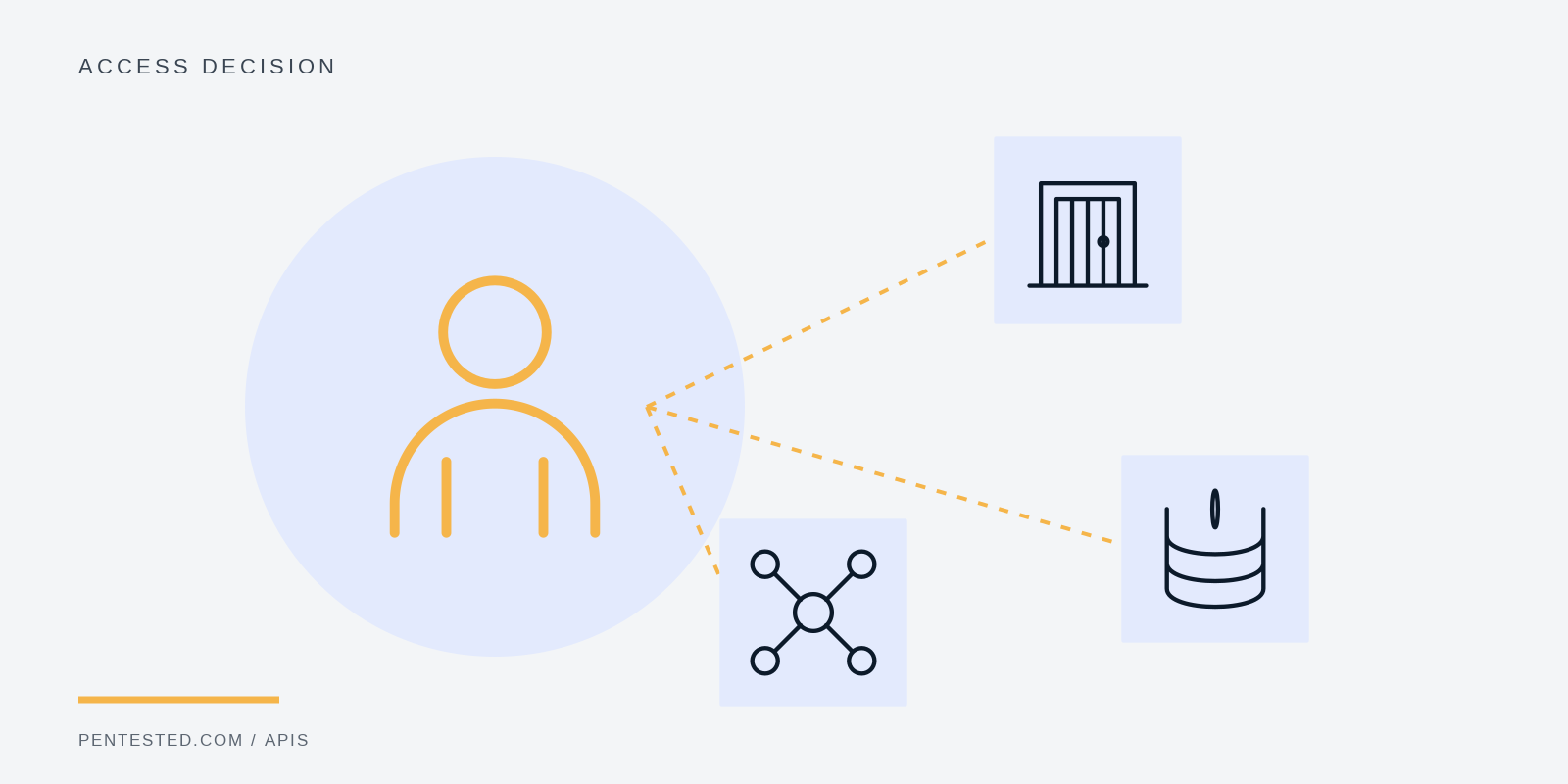
Permission to access a record does not imply permission to see or change every property it contains. Understanding broken property-level authorisation in API responses and updates helps establish which security property the feature needs and where that property is actually enforced.
What does this involve?
Authorisation determines which resources and operations an established identity may use. It must be enforced where protected data is read or changed. User interface restrictions, obscure identifiers and documentation can help usability, but they do not replace the service's own permission decision.
Why it matters
Consider a realistic failure: an ordinary account adds an administrator flag to an otherwise legitimate profile update.
A missing check can expose another account's information or let an ordinary user perform a privileged action. The result should be described by the actual records and operations reached, including whether access crosses a customer or organisational boundary.
An API review follows the server-side behaviour behind the interface. Direct requests, alternate methods and background operations can reveal boundaries that the normal frontend journey does not exercise.
How penetration testers check for it
Compare response fields and writable properties against the caller's role and operation.
- Compare users with different roles and ownership relationships.
- Exercise read, change, delete and alternate access paths.
- Test nested resources, background processing and state changes.
- Confirm rejection as well as the legitimate successful journey.
How to fix it
Use explicit field-level response and update policies rather than trusting automatic model binding.
- Define explicit access rules and default-deny behaviour.
- Bind resource selection to trusted ownership and tenant context.
- Enforce permission checks at each protected operation.
- Maintain regression cases for unauthorised users and changed permissions.
A successful response alone does not prove unauthorised access. Establish whose resource was affected and what the caller was legitimately entitled to do.
Recheck the changed behaviour against the original failure conditions and the legitimate user journey. Keep enough evidence to show which release and configuration were verified, and include related entry points that depend on the same security decision.
Related issues
- Broken function-level authorisation in APIs
- Broken object-level authorisation in APIs
- API mass assignment and protected field updates
Read about our methodology or contact pentested.com to discuss your APIs and integrations.