Using device attestation to support mobile risk decisions
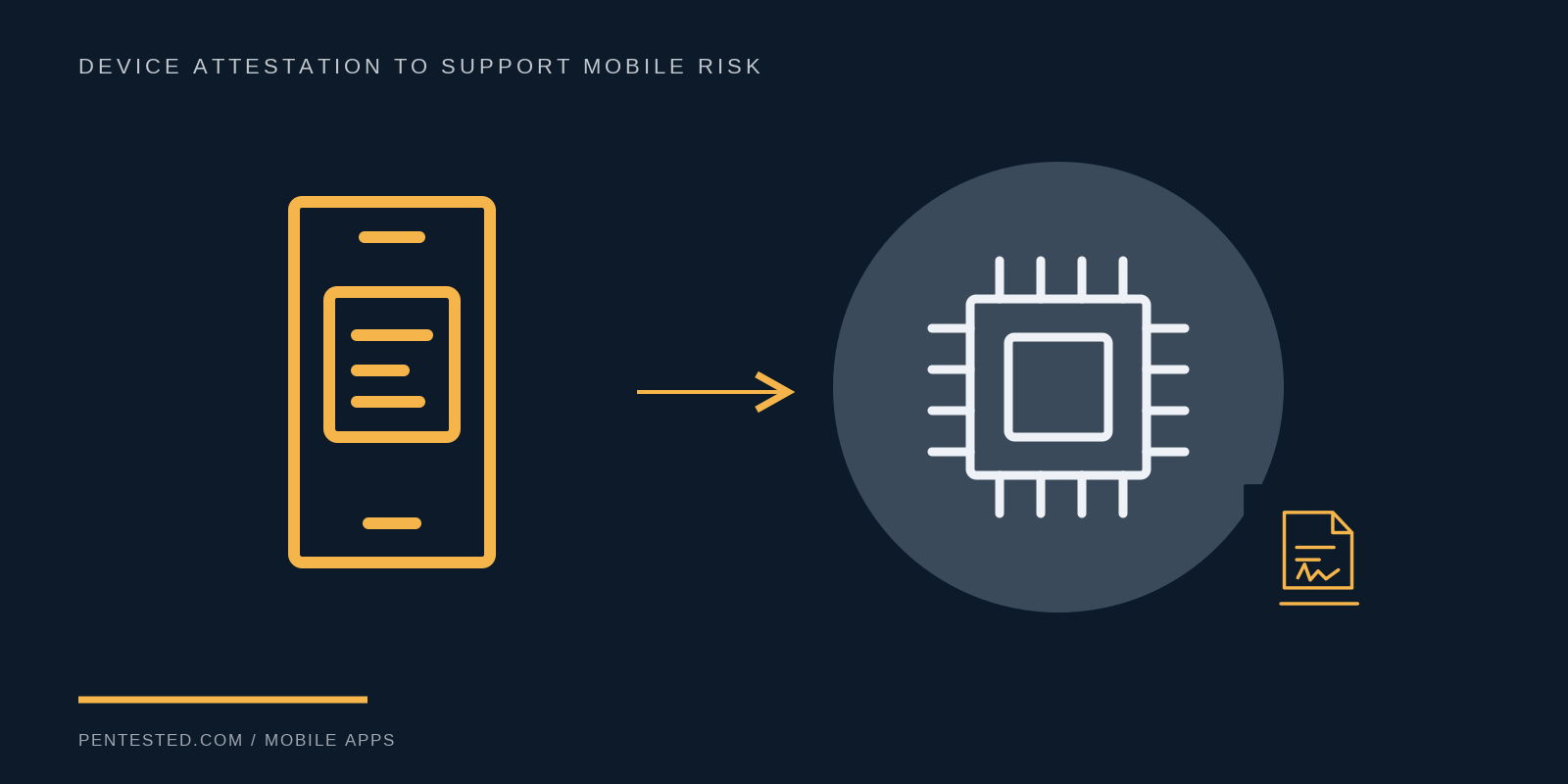
Device attestation can provide evidence about a device or execution environment under a defined trust model. Understanding device attestation to support mobile risk decisions helps establish which security property the feature needs and where that property is actually enforced.
What does this involve?
Resilience measures can make inspection, modification or misuse more difficult under a defined threat model. They are supplementary controls around an application that still needs sound server permissions, protected keys and safe handling of untrusted information.
Why it matters
Consider a realistic failure: a replayed attestation response is accepted for a different session.
The value of a resilience weakness depends on what analysis or modification enables. Revealing ordinary client code is different from obtaining a privileged credential or making the service trust a forged security decision.
Mobile behaviour can change between a fresh installation, an authenticated session, background activity and a device migration. The assessment needs the actual release and representative supported device states.
How penetration testers check for it
Review challenge freshness, audience, verification location and failure policy.
- Identify the asset and threat the control is meant to address.
- Assess realistic modification and analysis paths.
- Observe the effect on protected operations and server decisions.
- Distinguish increased analysis effort from enforced security boundaries.
How to fix it
Verify attestation on a trusted server and bind it to the current application request.
- Remove secrets and unnecessary authority from distributed clients.
- Use proportionate maintained platform protections.
- Bind important assertions to trusted verification.
- Plan safe failure, recovery and legitimate user support.
Root detection, obfuscation and similar measures are not universal requirements for every application. A finding should explain why the particular control matters to the assessed product.
Recheck the changed behaviour against the original failure conditions and the legitimate user journey. Keep enough evidence to show which release and configuration were verified, and include related entry points that depend on the same security decision.
Related issues
- Step-up authentication for high-risk mobile actions
- Mobile malware signals and their limitations
- Mobile emulator detection and its practical limitations
Read about our methodology or contact pentested.com to discuss your mobile applications.