Trust boundaries for mobile app extensions
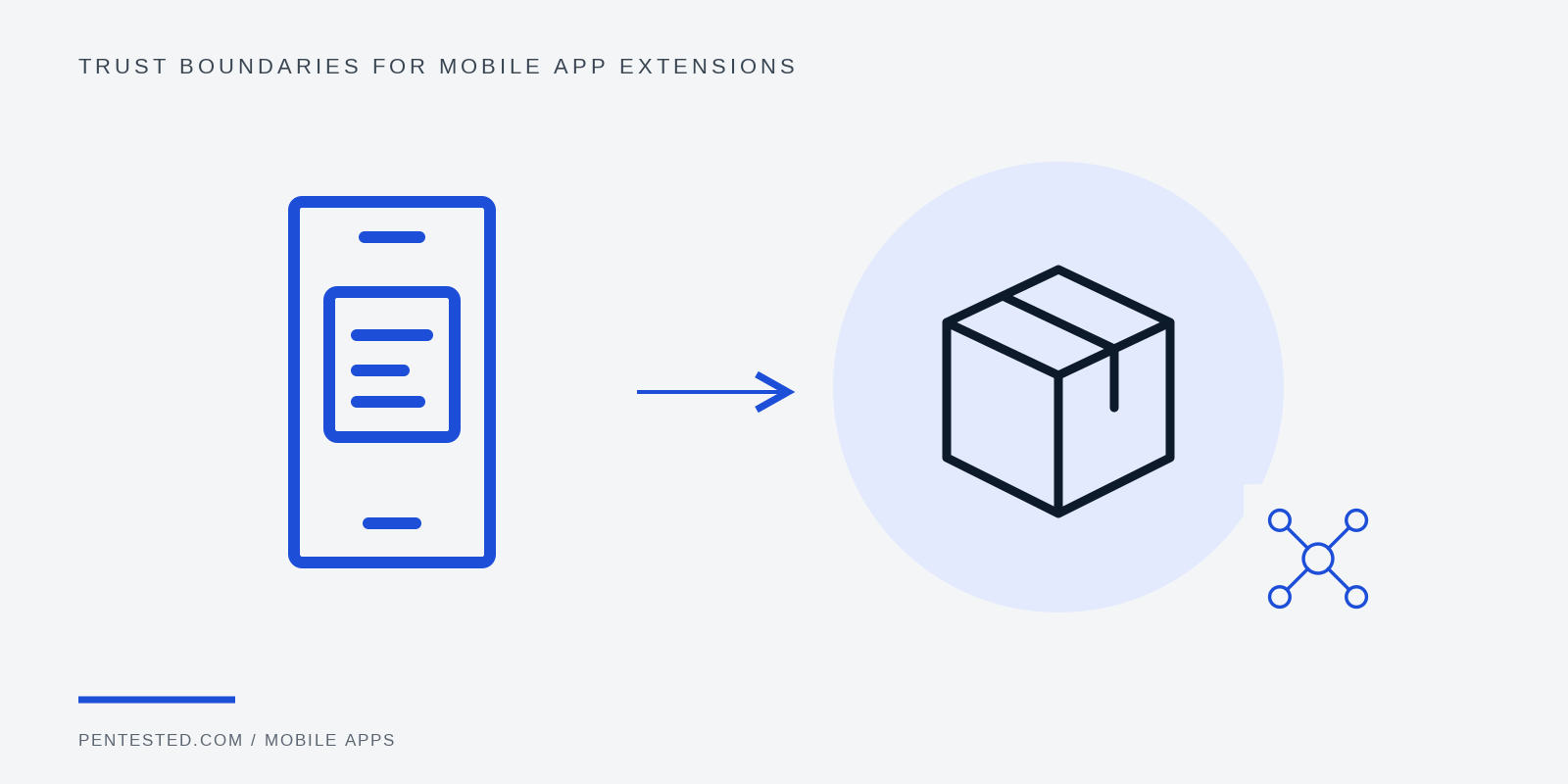
Extensions and shared containers can expand which code can access an application's sensitive information. Understanding trust boundaries for mobile app extensions helps establish which security property the feature needs and where that property is actually enforced.
What does this involve?
A framework provides useful security mechanisms only when the application uses them consistently and deploys them with appropriate settings. Custom handlers, plugins and alternate execution paths can bypass protections that the development team assumes are automatic.
An app can reject custom keyboards across the whole app by implementing application:shouldAllowExtensionPointIdentifier: in its UIApplicationDelegate and returning false for the keyboard extension point (UIApplicationKeyboardExtensionPointIdentifier). High-assurance apps, for example banking apps, use this app-wide control so that no field ever receives input from a third-party keyboard.
Why it matters
Consider a realistic failure: an extension receives broad access to an app group containing account records.
A configuration or integration mistake can affect many routes at once. The important question is which application data and operations become reachable, rather than whether a framework option merely differs from its default.
Mobile behaviour can change between a fresh installation, an authenticated session, background activity and a device migration. The assessment needs the actual release and representative supported device states.
How penetration testers check for it
Review extension identity, entitlements, shared data and invocation paths.
- Review supported runtime versions and release settings.
- Trace identity, input and output through real application paths.
- Inspect custom integrations and security overrides.
- Test important negative cases alongside ordinary functionality.
How to fix it
Share only the necessary data and validate callers and extension trust relationships.
- Use maintained framework features and supported versions.
- Keep security-sensitive configuration explicit and reviewed.
- Avoid unnecessary custom replacements for trusted mechanisms.
- Retain regression checks for the application's actual trust boundaries.
A secure framework cannot determine every business permission or data ownership rule. Those requirements still need clear application design and enforcement.
Recheck the changed behaviour against the original failure conditions and the legitimate user journey. Keep enough evidence to show which release and configuration were verified, and include related entry points that depend on the same security decision.
Related issues
- Mapping mobile app data flows and trust boundaries
- Hybrid mobile apps and embedded browser trust boundaries
- React Native mobile app security boundaries
Read about our methodology or contact pentested.com to discuss your mobile applications.