Mobile debugger detection and bypass limitations
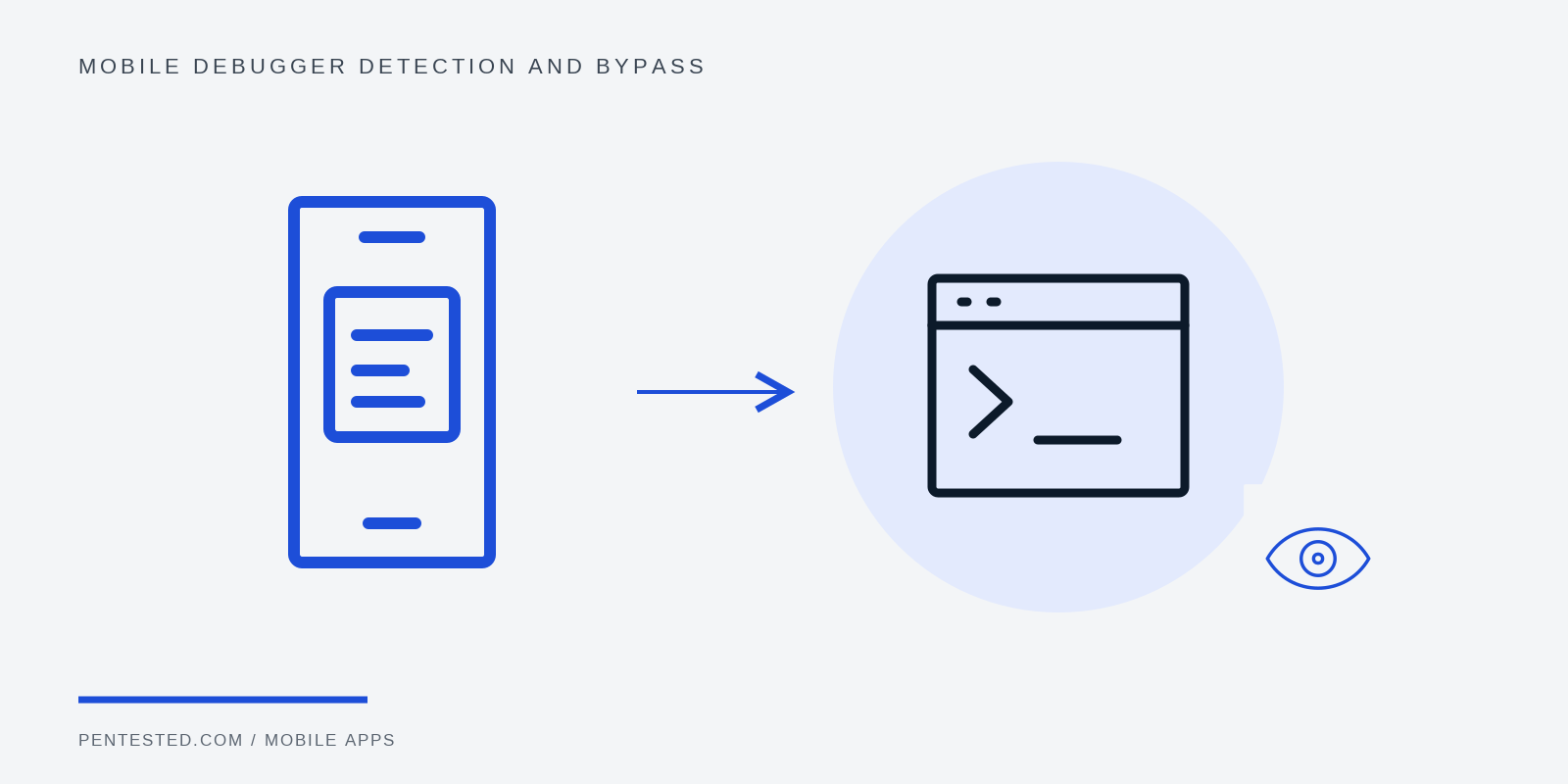
Debugger detection is a resilience measure whose value depends on the attack being considered. Understanding mobile debugger detection and bypass limitations helps establish which security property the feature needs and where that property is actually enforced.
What does this involve?
Resilience measures can make inspection, modification or misuse more difficult under a defined threat model. They are supplementary controls around an application that still needs sound server permissions, protected keys and safe handling of untrusted information.
Apps can implement debugging detection at the Java/Kotlin level using APIs such as Debug.isDebuggerConnected, or at the native level using mechanisms such as ptrace calls, TracerPid checks in /proc/self/status, or inlined syscalls. If these checks are absent or not applied in security-relevant code paths, an attacker can attach a debugger undetected and use it to inspect or modify runtime state, extract sensitive data, or bypass security controls.
Even if an app references debugging detection APIs, those checks may not execute in security-relevant code paths at runtime. For example, they may only run in debug build variants, fire only once at startup, or be dead code that's never reached. If the app doesn't invoke its debugging detection logic at the right moments, an attacker can attach a debugger without triggering any defensive response.
Why it matters
Consider a realistic failure: a debugger signal is ignored on one startup path that performs a sensitive operation.
The value of a resilience weakness depends on what analysis or modification enables. Revealing ordinary client code is different from obtaining a privileged credential or making the service trust a forged security decision.
Mobile behaviour can change between a fresh installation, an authenticated session, background activity and a device migration. The assessment needs the actual release and representative supported device states.
How penetration testers check for it
Assess detection timing and resulting behaviour under realistic analysis conditions.
- Determine whether the check is called in release builds and not only in debug configurations.
- Determine whether the app takes a security-relevant action when a debugger is detected (for example, process termination or feature restriction).
- Exercise the app extensively to trigger as many flows as possible and enter sensitive data wherever you can.
- Determine whether the checks are called in release builds and not only in debug configurations.
- Observe the effect on protected operations and server decisions.
- Distinguish increased analysis effort from enforced security boundaries.
How to fix it
Use proportionate resilience and protect critical operations independently of the detector.
- Remove secrets and unnecessary authority from distributed clients.
- Use proportionate maintained platform protections.
- Bind important assertions to trusted verification.
- Plan safe failure, recovery and legitimate user support.
Root detection, obfuscation and similar measures are not universal requirements for every application. A finding should explain why the particular control matters to the assessed product.
Recheck the changed behaviour against the original failure conditions and the legitimate user journey. Keep enough evidence to show which release and configuration were verified, and include related entry points that depend on the same security decision.
Related issues
- Mobile emulator detection and its practical limitations
- Runtime instrumentation and mobile tamper detection
- Mobile malware signals and their limitations
Read about our methodology or contact pentested.com to discuss your mobile applications.