Generating strong mobile encryption keys
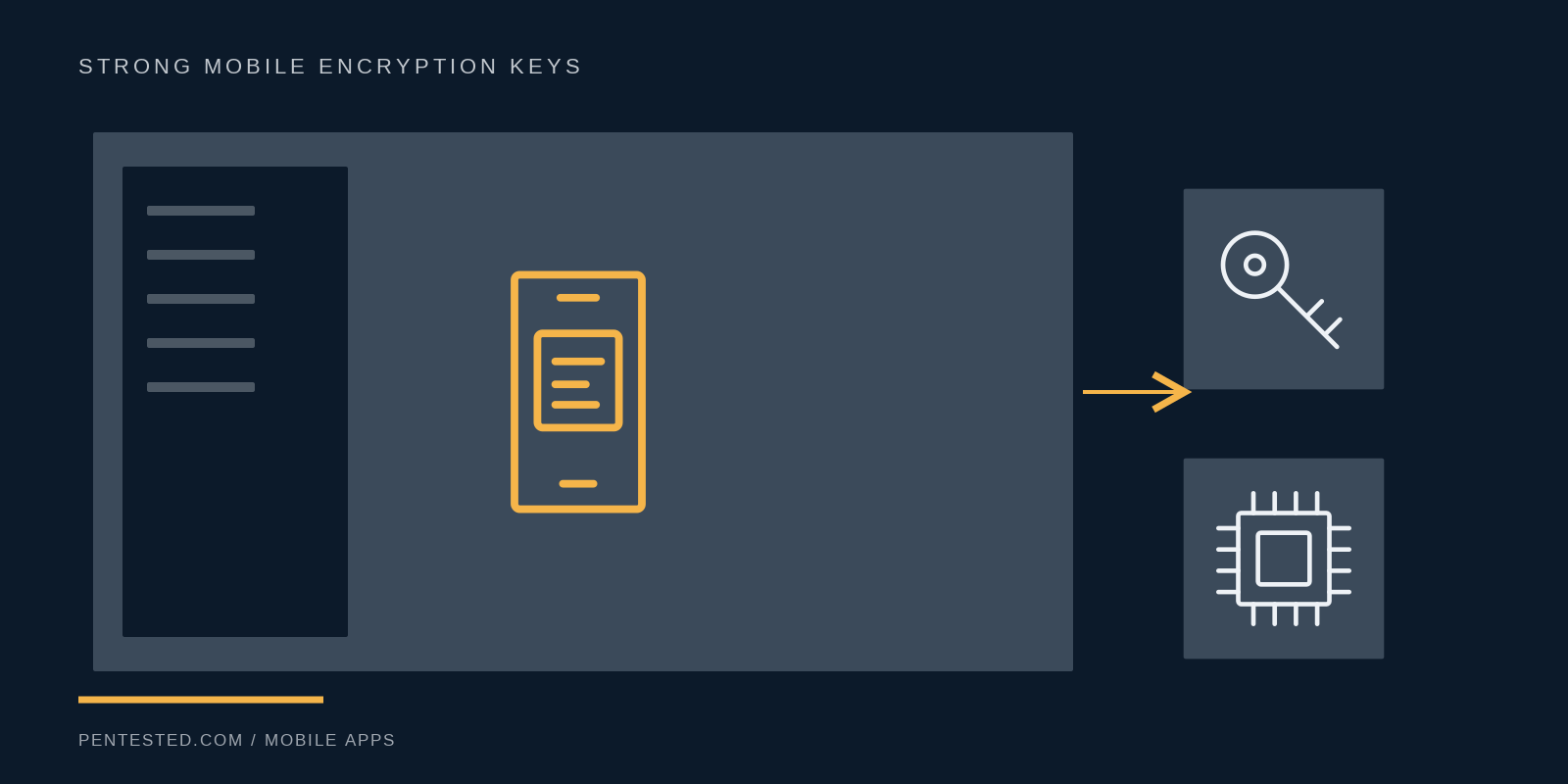
A strong mobile key starts with secure generation and a suitable key size. Understanding strong mobile encryption keys helps establish which security property the feature needs and where that property is actually enforced.
What does this involve?
Cryptographic protection depends on the whole operation: the algorithm, its parameters, key handling and the way results are verified. Different mechanisms provide confidentiality, integrity or evidence of origin. Substituting one property for another can leave the important business requirement unprotected.
The Java Cryptography Architecture (JCA) provides foundational classes for key generation which are often used directly when portability or compatibility with older systems is a concern.
Why it matters
Consider a realistic failure: several installations receive the same encryption key from a bundled resource.
A weakness can undermine trust in stored records or messages even when their appearance does not change. Assessment should connect the defect to the data or action it protects and the capabilities available to an attacker.
Mobile behaviour can change between a fresh installation, an authenticated session, background activity and a device migration. The assessment needs the actual release and representative supported device states.
How penetration testers check for it
Compare key creation across installations and inspect generation and provisioning paths.
- KeyGenerator: The KeyGenerator class is used to generate symmetric keys including AES, DES, ChaCha20 or Blowfish, as well as various HMAC keys. The key size can be specified using the init(int keysize) method.
- KeyPairGenerator: The KeyPairGenerator class is used for generating key pairs for asymmetric encryption (e.g., RSA, EC). The key size can be specified using the initialize(int keysize) method.
- CommonCrypto: The CCCrypt function is used for symmetric encryption and decryption and specifies the key size or key length in its fifth parameter keyLength.
- Security: The SecKeyCreateRandomKey function is used to generate a random key using certain attributes including kSecAttrKeyType and kSecAttrKeySizeInBits. The SecKeyGeneratePair function is deprecated in iOS 16.
- Trace key generation, access, replacement and verification.
- Test invalid inputs and failure handling with controlled data.
How to fix it
Generate independent keys with approved platform facilities and document ownership and replacement.
- Use maintained standard implementations and appropriate parameters.
- Protect keys throughout generation, use and retirement.
- Authenticate the content and identity that the operation actually relies on.
- Reject failed verification before trusting or processing the result.
An unusual cryptographic implementation is not enough to establish practical compromise. The report should explain the failed property and a defensible consequence.
Recheck the changed behaviour against the original failure conditions and the legitimate user journey. Keep enough evidence to show which release and configuration were verified, and include related entry points that depend on the same security decision.
Related issues
- Deriving mobile encryption keys safely
- Restricting access to mobile cryptographic keys
- Choosing safe encryption for mobile applications
Read about our methodology or contact pentested.com to discuss your mobile applications.