Penetration testing and security guides — page 12
How penetration tests work, what the findings mean and how to fix them.
Toxic or harmful content generated by AI systems
Review toxic or harmful content generated by AI systems. Understand the business impact and the checks that guide an effective fix for security teams.
OpenAPI schema drift and incomplete security definitions
Understand openapi schema drift and incomplete security definitions. Explore realistic risks, testing checks and practical fixes in real applications.
Auditing cookie configuration and browser scope
Understand cookie configuration and browser scope. Learn how it affects your business, what testers verify and which practical changes reduce the risk.
Distributing authorisation policy and decision data safely
Review authorisation policy and decision data safely. See practical examples, useful verification checks and ways to strengthen the relevant controls.
Handling signed, encrypted and proprietary firmware containers
Understand signed and encrypted and proprietary firmware containers. Explore realistic risks, testing checks and practical fixes in real applications.
Weak cryptography used by IoT device memory
Review weak cryptography used by IoT device memory. Understand the business impact and the checks that guide an effective fix with practical examples.
Predictable random values in mobile applications
Review predictable random values in mobile applications. Understand the business impact and the checks that guide an effective fix for security teams.

Web server configuration mistakes that expose your data
Review web server configuration risks, from unwanted default features to public diagnostics, and learn how testers check settings and confirm fixes.
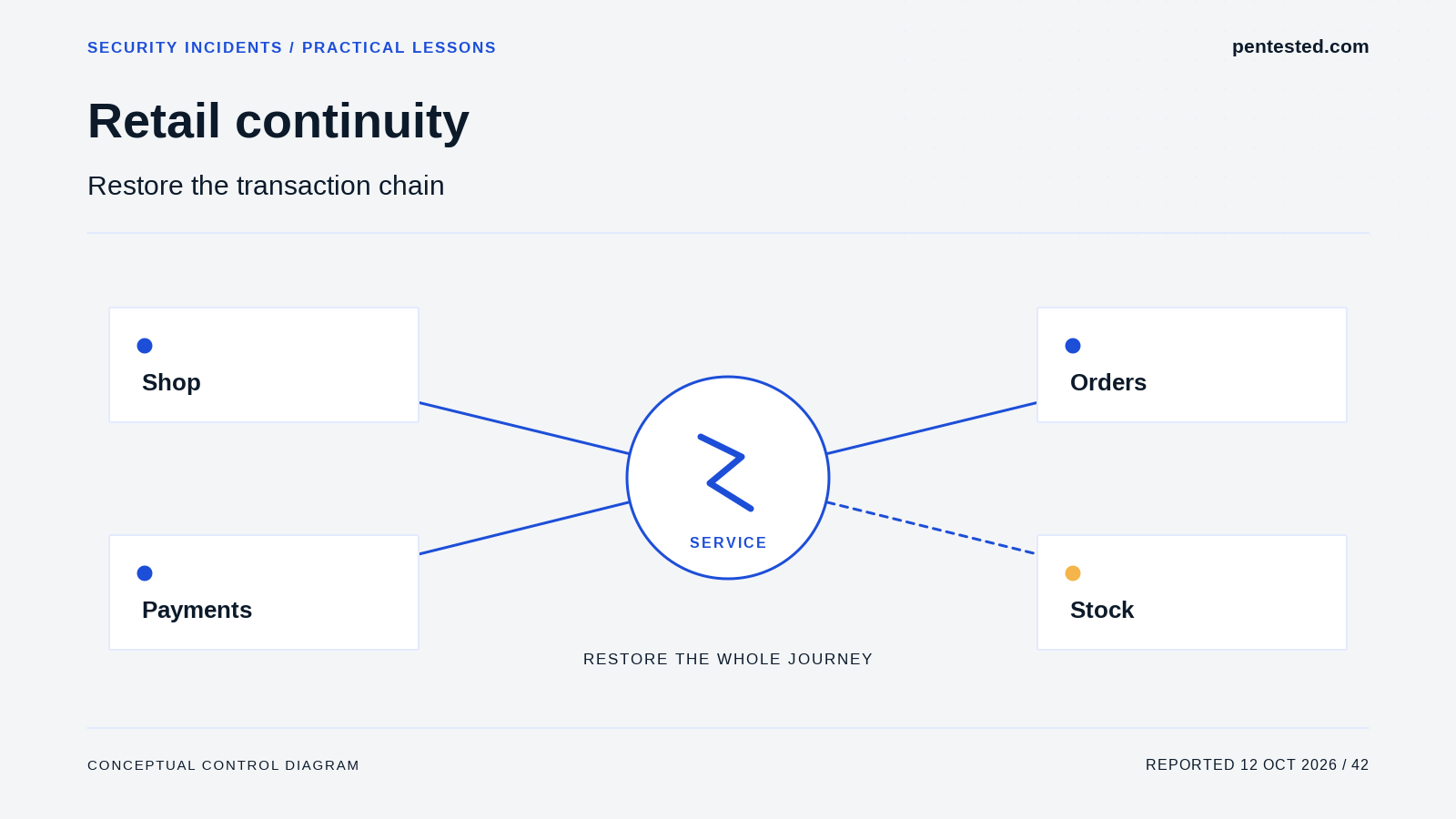
What the Ahold Delhaize cyberattack teaches about retail resilience
Examine the Ahold Delhaize cyberattack and retail-continuity lessons for online orders, payment dependencies, reopening decisions and transaction recovery.