User information recoverable from IoT device memory
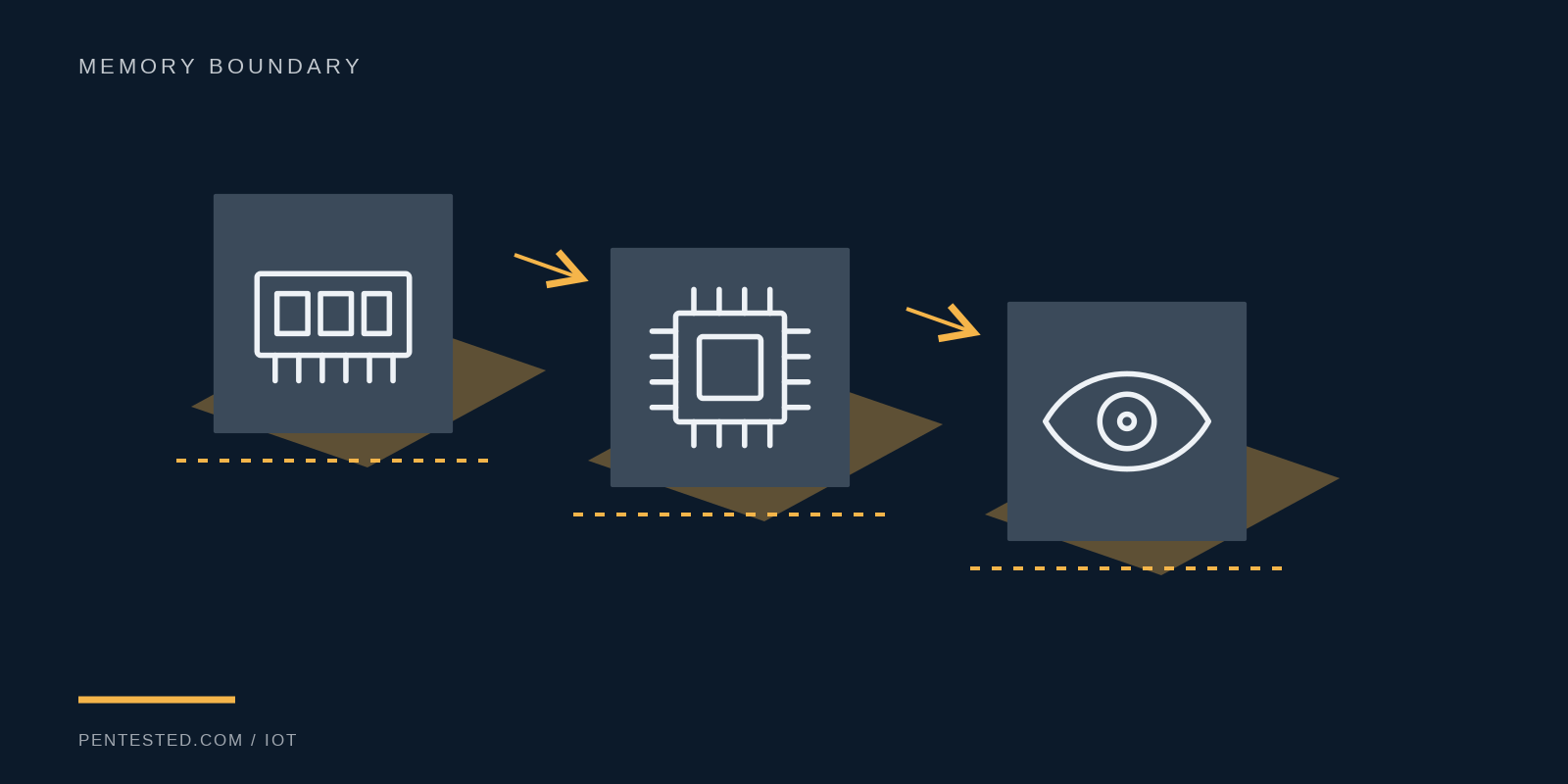
User information recoverable from IoT device memory concerns the memory and persisted device state and the access conditions under which the device exposes information or performs an operation. Understanding user information recoverable from IoT device memory helps establish which security property the feature needs and where that property is actually enforced.
What does this involve?
Device security spans processing, storage and interfaces that may be physically accessible outside the operator's control. Access conditions matter: opening a case, attaching a peripheral and sending a network request represent different attacker capabilities.
During runtime, a device is accumulating and processing data of different kinds, such as personal data of its users. If this data is not stored securely, an attacker might be able to recover it from the device.
Access to user data should only be granted to individuals and processes that need to have access to it. No unauthorised or not properly authorised individual should be able to recover user data.
Why it matters
Consider a realistic failure: a recovered memory region reveals information that the normal management interface does not make available.
A device weakness can reveal local data, change operations or expose credentials used by the wider service. Assessment should distinguish what is obtained from the device itself from any separately demonstrated backend access.
Device findings need explicit access conditions. Record the hardware and software version, relevant interface exposure and whether the test assumes network access, an attached peripheral or access inside the enclosure.
How penetration testers check for it
Assess the stated device access level and verify the particular information, command or state change reachable through this component.
- It has to be checked whether user data can be accessed by unauthorised individuals.
- Use representative device states and controlled inputs.
- Record the actual information or behaviour reached.
How to fix it
Reduce unnecessary exposure and enforce the intended operation and data boundary at the device component that controls it.
- Remove unnecessary interfaces and capabilities.
- Enforce access checks at meaningful device boundaries.
- Protect sensitive storage and device credentials.
- Verify normal operation and recovery after changes.
Physical access is neither an automatic exemption nor proof of total compromise. The intended deployment, assets and realistic access prerequisites determine the relevance of the result.
Recheck the changed behaviour against the original failure conditions and the legitimate user journey. Keep enough evidence to show which release and configuration were verified, and include related entry points that depend on the same security decision.
Related issues
- Information exposed through IoT device memory
- Secrets accessible through IoT device memory
- Weak cryptography used by IoT device memory
Read about our methodology or contact pentested.com to discuss your connected devices.