Building security into connected drone software and interfaces
Building security into connected drone software and interfaces connects a security requirement to the behaviour of a real feature. The relevant controls need to remain effective across custom code, integrations and the production configuration. Understanding security into connected drone software and interfaces helps establish which security property the feature needs and where that property is actually enforced.
What does this involve?
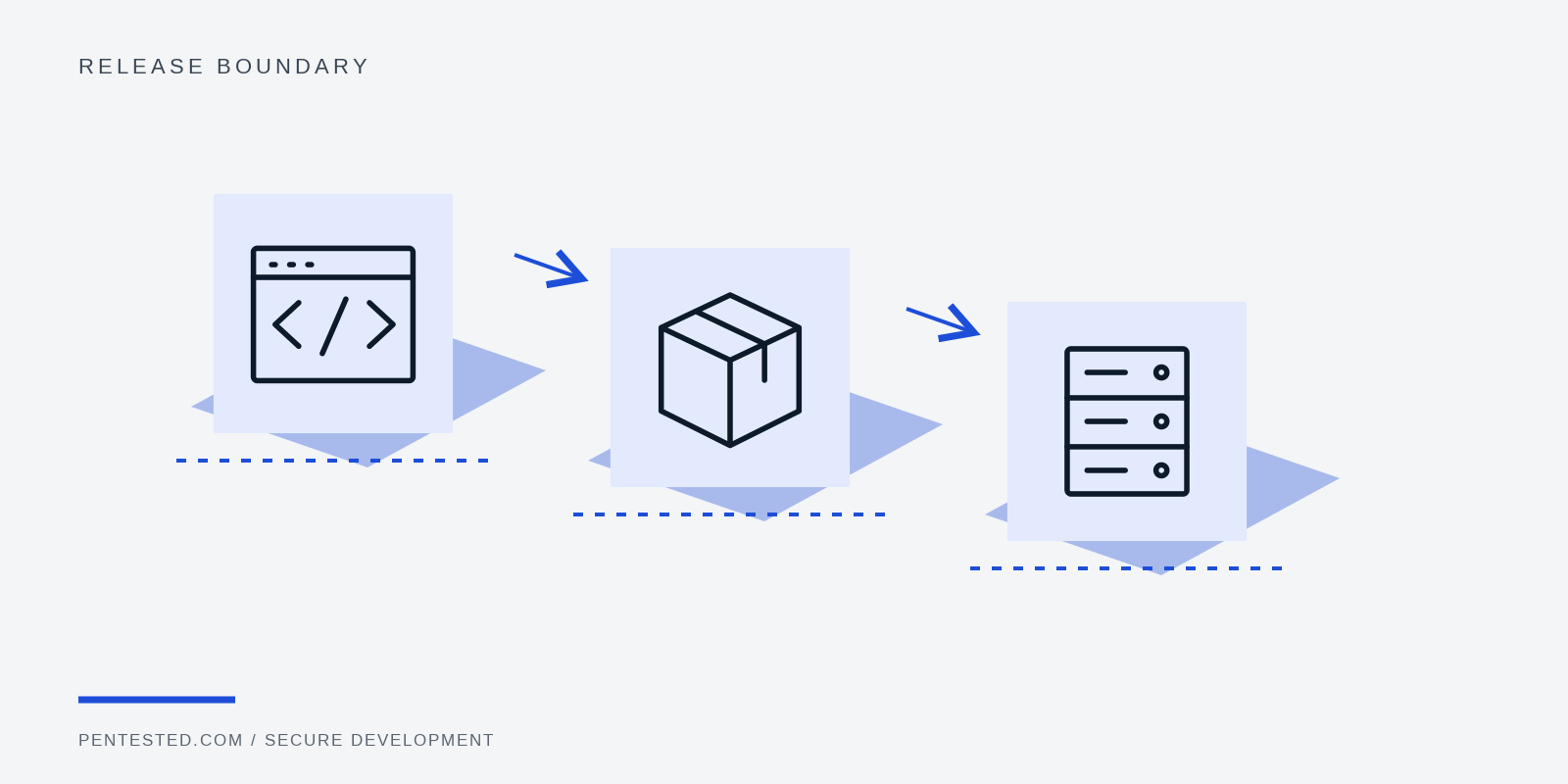
Release security connects reviewed source and configuration to the software that reaches production. Build identities, dependencies, signing, artefact storage and deployment permissions all influence whether the delivered application matches the intended release.
Drone security is crucial due to their widespread adoption in industries such as military, construction, and community services. With the increasing use of drone swarms, even minor security lapses can lead to significant risks.
The communication between the drone and the GCS is vulnerable to interception and attacks. This will be made evident in the future sections as well. It is important to understand that peripherals attached to drone may be vulnerable too! To explain this, we have made a list of vulnerable endpoints below.
Why it matters
Consider a realistic failure: a drone management feature trusts an unauthenticated command or exposes unnecessary control interfaces.
An attacker who changes a trusted build input or release artefact may reach many users or systems through a legitimate delivery channel. Broad credentials and weak separation can increase the effect of one compromised job or account.
Implementation guidance should be applied to a real feature and its deployment. Framework defaults, custom handlers and integrated services all influence whether the intended protection remains effective.
How penetration testers check for it
Trace the relevant feature from its entry point to the data or operation it protects, including custom code and alternate paths.
- Trace source changes through build, signing and deployment.
- Review identity, permissions and secret exposure at each stage.
- Inspect artefact provenance and integrity checks.
- Compare development assumptions with actual release configuration.
How to fix it
Use the appropriate maintained mechanisms and verify the result in the actual production configuration.
- Insecure Communication Links – Data transmitted between the drone and GCS can be intercepted if not properly encrypted. Use standard protocols for encryption of any data being sent over.
- Command Spoofing and Replay Attacks – Authenticate command messages and reject replayed messages using the protocol's freshness checks. For MAVLink, use message signing and timestamp validation; encryption alone does not provide these controls.
- Wi-Fi Weaknesses – Weak authentication or unprotected channels can allow unauthorised access. This is even possible through simple microcontrollers like ESP8266!.
- Use 802.11w MFP (Management Frame Protection) to prevent Wi-Fi deauthentication attacks. Don't worry, if your Wi-Fi systems are up-to-date, then this is a default protocol now.
- Control dependency and artefact changes.
- Validate production outputs and retain a reliable recovery path.
Passing a build does not establish trustworthy provenance. Verification needs to cover who could alter the inputs and artefacts as well as whether the pipeline ran successfully.
Recheck the changed behaviour against the original failure conditions and the legitimate user journey. Keep enough evidence to show which release and configuration were verified, and include related entry points that depend on the same security decision.
Related issues
- Outdated and unnecessary software behind IoT user interfaces
- Outdated and unnecessary software behind IoT wireless interfaces
- Outdated and unnecessary software behind IoT internal interfaces
Read about our methodology or contact pentested.com to discuss secure development and code review.


