Building mobile security checks into the development lifecycle
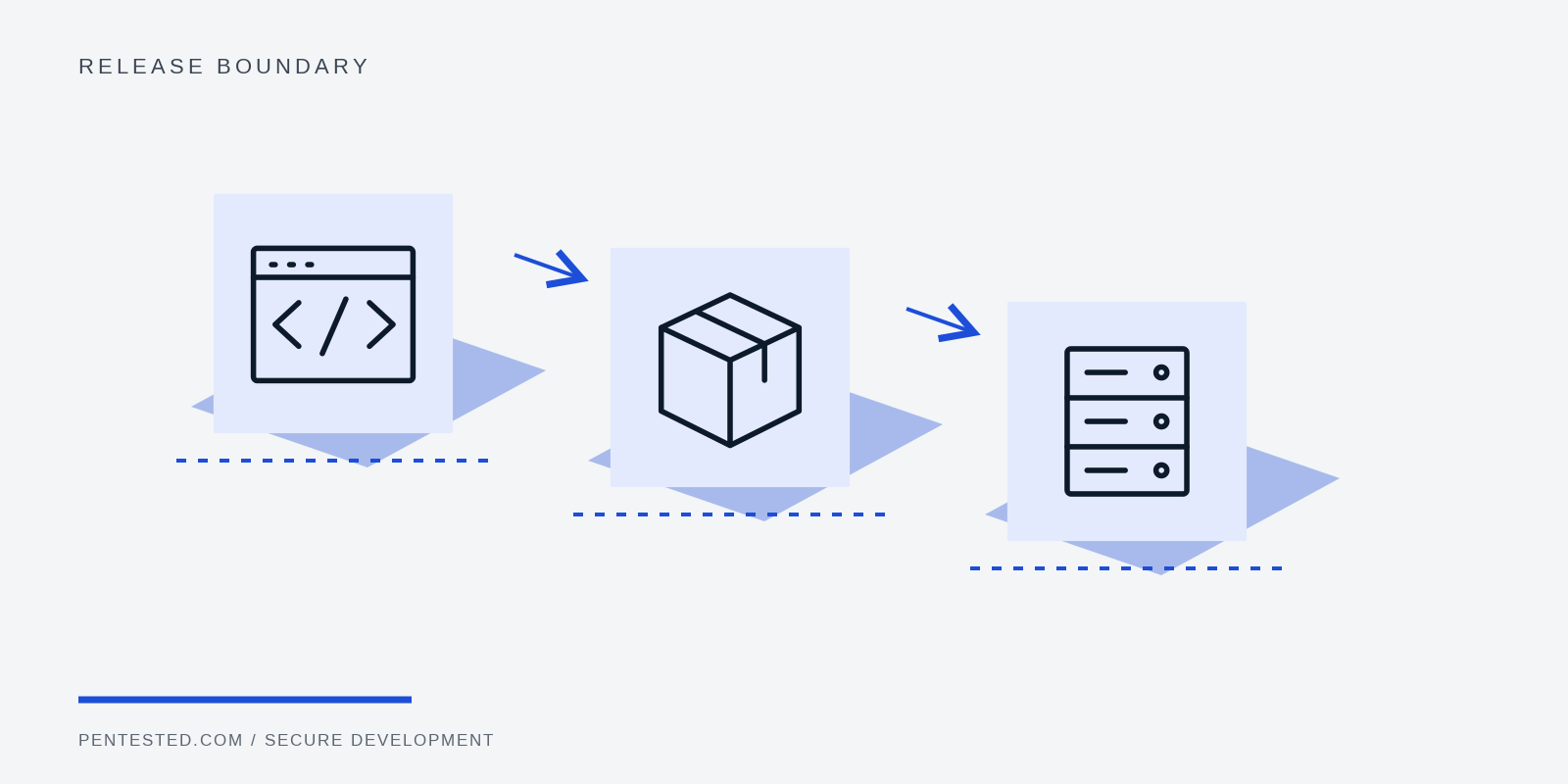
Building mobile security checks into the development lifecycle connects a security requirement to the behaviour of a real feature. The relevant controls need to remain effective across custom code, integrations and the production configuration. Understanding mobile security checks into the development lifecycle helps establish which security property the feature needs and where that property is actually enforced.
What does this involve?
Release security connects reviewed source and configuration to the software that reaches production. Build identities, dependencies, signing, artefact storage and deployment permissions all influence whether the delivered application matches the intended release.
Why it matters
Consider a realistic failure: a mobile release adds an SDK whose permissions and data flows were never included in the development review.
An attacker who changes a trusted build input or release artefact may reach many users or systems through a legitimate delivery channel. Broad credentials and weak separation can increase the effect of one compromised job or account.
Implementation guidance should be applied to a real feature and its deployment. Framework defaults, custom handlers and integrated services all influence whether the intended protection remains effective.
How penetration testers check for it
Trace the relevant feature from its entry point to the data or operation it protects, including custom code and alternate paths.
- Trace source changes through build, signing and deployment.
- Review identity, permissions and secret exposure at each stage.
- Inspect artefact provenance and integrity checks.
- Compare development assumptions with actual release configuration.
How to fix it
Use the appropriate maintained mechanisms and verify the result in the actual production configuration.
- Keep in mind security principles like least privilege, defense in depth, and.
- Ensure that your mobile app communicates securely with backend services.
- Use OAuth2, JWT, or similar for secure authentication.
- Avoid storing application files with overly permissive permissions.
- Control dependency and artefact changes.
- Validate production outputs and retain a reliable recovery path.
Passing a build does not establish trustworthy provenance. Verification needs to cover who could alter the inputs and artefacts as well as whether the pipeline ran successfully.
Recheck the changed behaviour against the original failure conditions and the legitimate user journey. Keep enough evidence to show which release and configuration were verified, and include related entry points that depend on the same security decision.
Related issues
- Mobile certificate pinning design and lifecycle risks
- Mobile certificate validation and hostname checks
- Applying secure Ruby on Rails development patterns
Read about our methodology or contact pentested.com to discuss secure development and code review.


