Auditing TLS protocols, certificates and encrypted connections
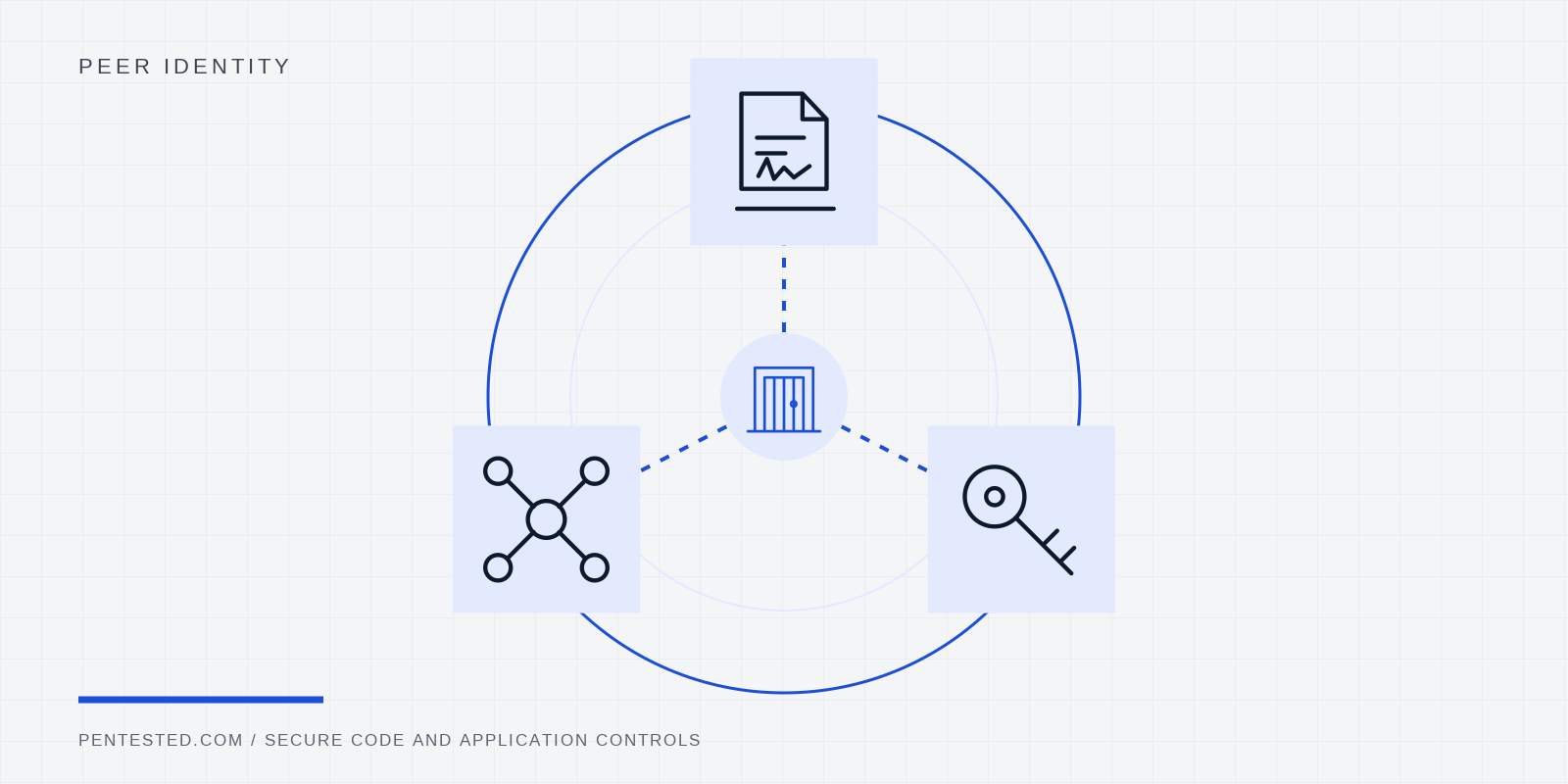
Secure communication must establish both protection in transit and the identity of the intended peer. Understanding TLS protocols and certificates and encrypted connections helps establish which security property the feature needs and where that property is actually enforced.
What does this involve?
Cryptographic protection depends on the whole operation: the algorithm, its parameters, key handling and the way results are verified. Different mechanisms provide confidentiality, integrity or evidence of origin. Substituting one property for another can leave the important business requirement unprotected.
While the use of wildcard TLS certificates is not inherently insecure, a compromise of a certificate that is deployed across all owned environments (e.g., production, staging, development, and test) may lead to a compromise of the security posture of the applications using it. Proper protection, management, and the use of separate TLS certificates in different environments should be employed if possible.
Why it matters
Consider a realistic failure: the public application uses HTTPS while a backend connection or alternate client path accepts an untrusted destination.
A weakness can undermine trust in stored records or messages even when their appearance does not change. Assessment should connect the defect to the data or action it protects and the capabilities available to an attacker.
A code audit connects a stated requirement to the implementation responsible for enforcing it. Source review and targeted behavioural checks should explain the same boundary and any relevant exceptions.
How penetration testers check for it
Review the specific control expectations below against the code, deployment and observable application behaviour.
- Confirm that only the latest recommended versions of the TLS protocol are enabled, such as TLS 1.2 and TLS 1.3. The latest version of the TLS protocol must be the preferred option.
- Confirm that only recommended cipher suites are enabled, with the strongest cipher suites set as preferred. L3 applications must only support cipher suites which provide forward secrecy.
- Confirm that the application validates that mTLS client certificates are trusted before using the certificate identity for authentication or authorisation.
- Confirm that proper certification revocation, such as Online Certificate Status Protocol (OCSP) Stapling, is enabled and configured.
- Confirm that Encrypted Client Hello (ECH) is enabled in the application's TLS settings to prevent exposure of sensitive metadata, such as the Server Name Indication (SNI), during TLS handshake processes.
- Trace key generation, access, replacement and verification.
- Test invalid inputs and failure handling with controlled data.
How to fix it
Implement the required boundary in the component that actually performs the sensitive operation and retain focused regression coverage.
- Use maintained standard implementations and appropriate parameters.
- Protect keys throughout generation, use and retirement.
- Authenticate the content and identity that the operation actually relies on.
- Reject failed verification before trusting or processing the result.
An unusual cryptographic implementation is not enough to establish practical compromise. The report should explain the failed property and a defensible consequence.
Recheck the changed behaviour against the original failure conditions and the legitimate user journey. Keep enough evidence to show which release and configuration were verified, and include related entry points that depend on the same security decision.
Related issues
- Reviewing backend connections, destinations and service permissions
- Handling signed, encrypted and proprietary firmware containers
- Distinguishing compressed, encrypted and bare-metal firmware
Read about our methodology or contact pentested.com to discuss the security of your application code.