Auditing application dependencies and architectural trust boundaries
Secure coding requires deliberate trust boundaries, defensive behaviour and safe handling of shared state. Understanding application dependencies and architectural trust boundaries helps establish which security property the feature needs and where that property is actually enforced.
What does this involve?
A software dependency becomes part of the application's effective behaviour and maintenance commitment. The important inventory is what the release actually contains, including transitive packages, bundled binaries and code that arrives through a build or update process.
Why it matters
Consider a realistic failure: two individually valid code paths combine to violate an important application permission or transaction assumption.
A compromised or vulnerable component may run with the application's privileges or receive information the business did not expect to share. Impact depends on reachability, permissions and actual data flows rather than a package name alone.
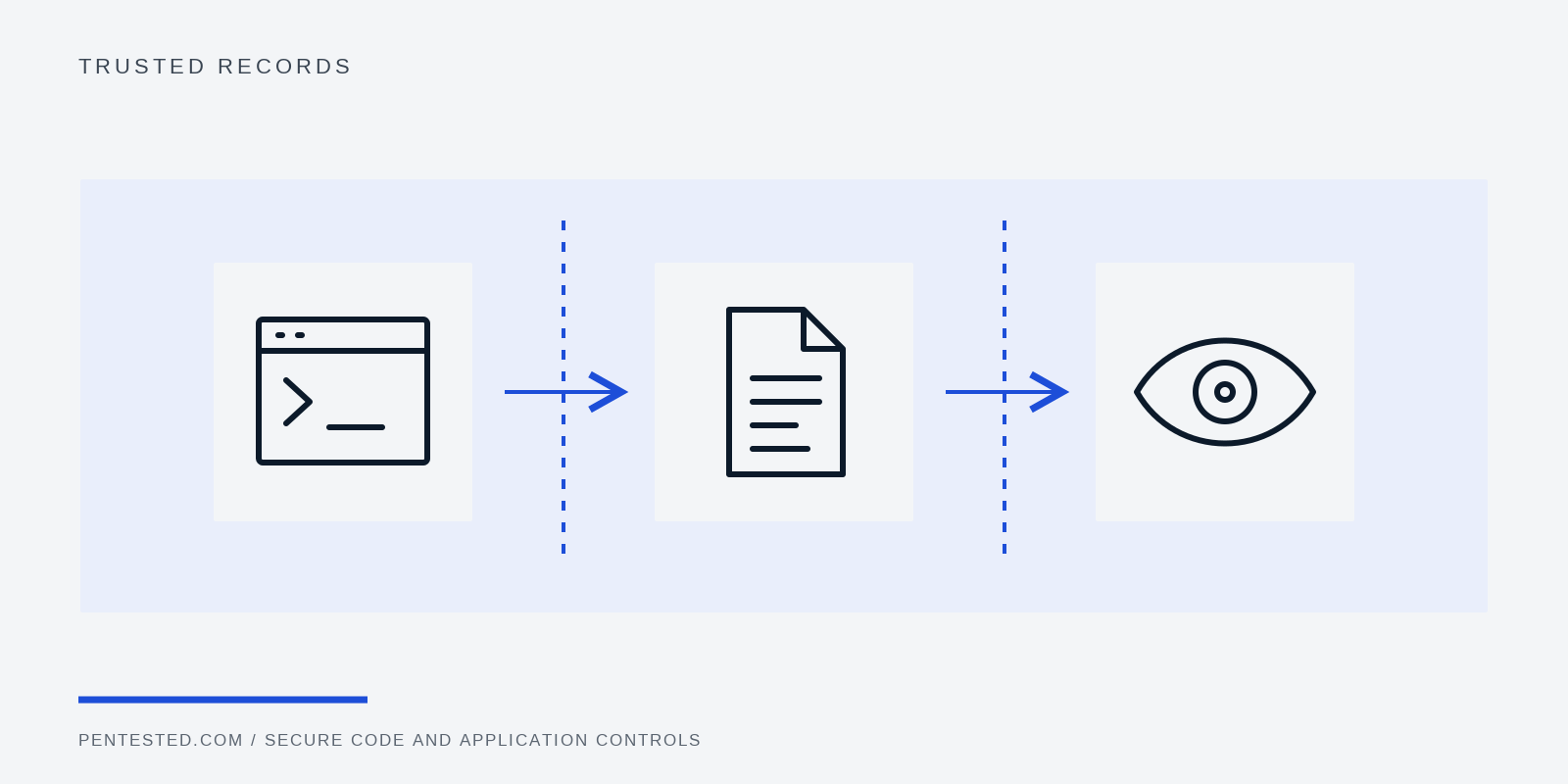
A code audit connects a stated requirement to the implementation responsible for enforcing it. Source review and targeted behavioural checks should explain the same boundary and any relevant exceptions.
How penetration testers check for it
Review the specific control expectations below against the code, deployment and observable application behaviour.
- Confirm that the application only contains components which have not breached the documented update and remediation time frames.
- Confirm that the application has implemented defenses against loss of availability due to functionality which is time-consuming or resource-demanding, based on the documented security decisions and strategies for this.
- Confirm that the production environment only includes functionality that is required for the application to function, and does not expose extraneous functionality such as test code, sample snippets, and development functionality.
- Confirm that third-party components and all of their transitive dependencies are included from the expected repository, whether internally owned or an external source, and that there is no risk of a dependency confusion attack.
- Confirm that the application implements additional protections around parts of the application which are documented as containing "dangerous functionality" or using third-party libraries considered to be "risky components". This could include techniques such as sandboxing, encapsulation, containerization or network level isolation to delay and deter attackers who compromise one part of an application from pivoting elsewhere in the application.
- Inspect transitive dependencies and unexpected runtime activity.
- Confirm whether affected code is reachable under realistic conditions.
How to fix it
Implement the required boundary in the component that actually performs the sensitive operation and retain focused regression coverage.
- Use maintained and appropriately trusted dependencies.
- Pin and review relevant changes in the delivery process.
- Remove unnecessary components and reduce their permissions.
- Verify remediation in the shipped release and its supporting artefacts.
A vulnerability identifier is a starting point for investigation. Version evidence, affected functionality and deployment conditions determine whether it creates a confirmed application risk.
Recheck the changed behaviour against the original failure conditions and the legitimate user journey. Keep enough evidence to show which release and configuration were verified, and include related entry points that depend on the same security decision.
Related issues
- Reviewing application deserialisation trust boundaries
- AI plugin trust boundaries and unauthorised capabilities
- Chaining firmware weaknesses across device trust boundaries
Read about our methodology or contact pentested.com to discuss the security of your application code.