Scoping an AI penetration test across models, data and integrations
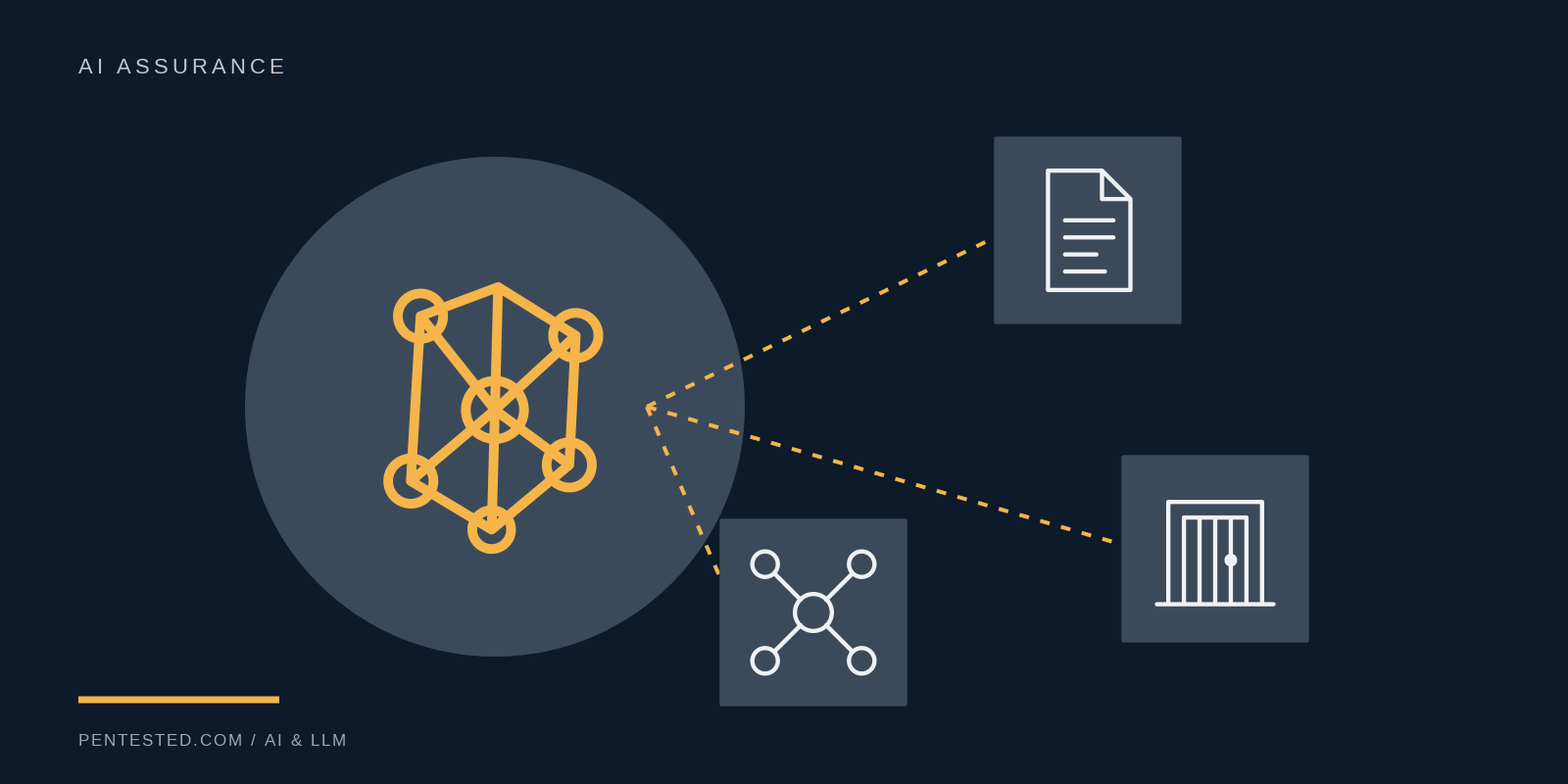
An AI assessment needs to include the application's data and action boundaries around the model. Understanding AI penetration test across models and data and integrations helps establish which security property the feature needs and where that property is actually enforced.
What does this involve?
An AI model can interpret instructions within information that the application intended to treat as data. The critical security boundary is the surrounding system: which private information it supplies and which actions it allows model-directed output to trigger.
Why it matters
Consider a realistic failure: a model-only evaluation misses a tool that exposes private customer records.
A strange response becomes a security issue when it discloses protected information, changes an authorised task or causes an unintended operation. The assessment should distinguish those consequences from cosmetic changes to the model's answer.
AI testing needs recorded model and application conditions because outputs can vary. The important evidence is the protected information, decision or tool operation affected in the deployed workflow.
How penetration testers check for it
Map models, prompts, retrieval, tools, providers and deployment identities.
- Map trusted instructions and untrusted input sources.
- Follow retrieved content through model and tool decisions.
- Repeat representative cases under recorded conditions.
- Verify actual data access and consequential actions.
How to fix it
Maintain coverage by component and connect findings to observable application consequences.
- Keep security decisions in trusted application controls.
- Limit model context and tool permissions to the task.
- Treat generated output as untrusted input to downstream systems.
- Maintain regression cases for important trust boundaries.
No prompt wording can establish an absolute instruction boundary for every possible input. Layered application controls are needed so a model failure does not automatically become a protected action.
Recheck the changed behaviour against the original failure conditions and the legitimate user journey. Keep enough evidence to show which release and configuration were verified, and include related entry points that depend on the same security decision.
Related issues
- Scoping an Android and iOS penetration test
- Security changes when switching AI models and providers
- Scoping IoT penetration tests by device component and access level
Read about our methodology or contact pentested.com to discuss your AI applications and agent workflows.