RAG document ingestion, provenance and poisoned knowledge sources
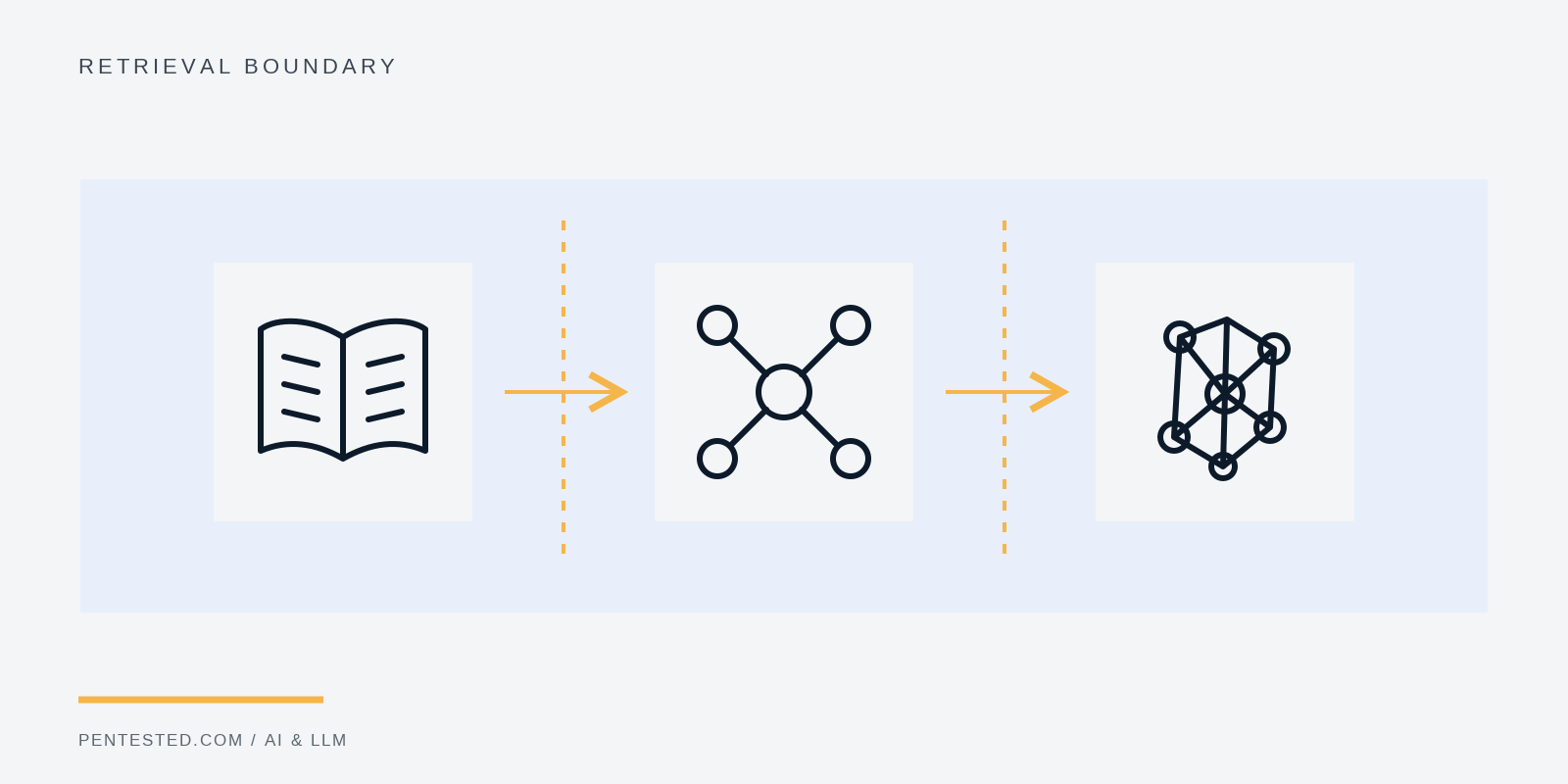
Document ingestion determines which external content can influence future AI responses. Understanding rag document ingestion and provenance and poisoned knowledge sources helps establish which security property the feature needs and where that property is actually enforced.
What does this involve?
AI data protection includes source documents, training material, retrieved context, logs and model outputs. Each copy has its own access and retention boundary. A correct permission check in the main application is insufficient if an index or tool exposes the same information elsewhere.
Why it matters
Consider a realistic failure: an untrusted upload becomes a high-ranking source without provenance or ownership checks.
A data weakness can affect confidentiality, privacy or the reliability of later AI decisions. The practical result depends on which material is available, who can influence it and how the application uses the resulting output.
AI testing needs recorded model and application conditions because outputs can vary. The important evidence is the protected information, decision or tool operation affected in the deployed workflow.
How penetration testers check for it
Review ingestion identity, source labels, indexing and update controls.
- Trace data origin, copies and intended recipients.
- Review ingestion and retrieval permissions.
- Compare user and tenant boundaries across indexes and tools.
- Assess provenance, retention and implemented user controls.
How to fix it
Preserve provenance and restrict which material can enter trusted knowledge collections.
- Minimise sensitive data and unnecessary duplication.
- Preserve trustworthy provenance and ownership information.
- Enforce access before retrieval and consequential use.
- Verify deletion and isolation across relevant pipeline components.
A vector representation should not be assumed anonymous or permission-free. Its exposure and use need to be assessed according to the original data and the capabilities available to a recipient.
Recheck the changed behaviour against the original failure conditions and the legitimate user journey. Keep enough evidence to show which release and configuration were verified, and include related entry points that depend on the same security decision.
Related issues
- Tenant isolation and document permissions in RAG systems
- Poisoned training datasets and AI backdoor behaviour
- Building authorisation and provenance controls into RAG pipelines
Read about our methodology or contact pentested.com to discuss your AI applications and agent workflows.