Extracting model behaviour through application queries
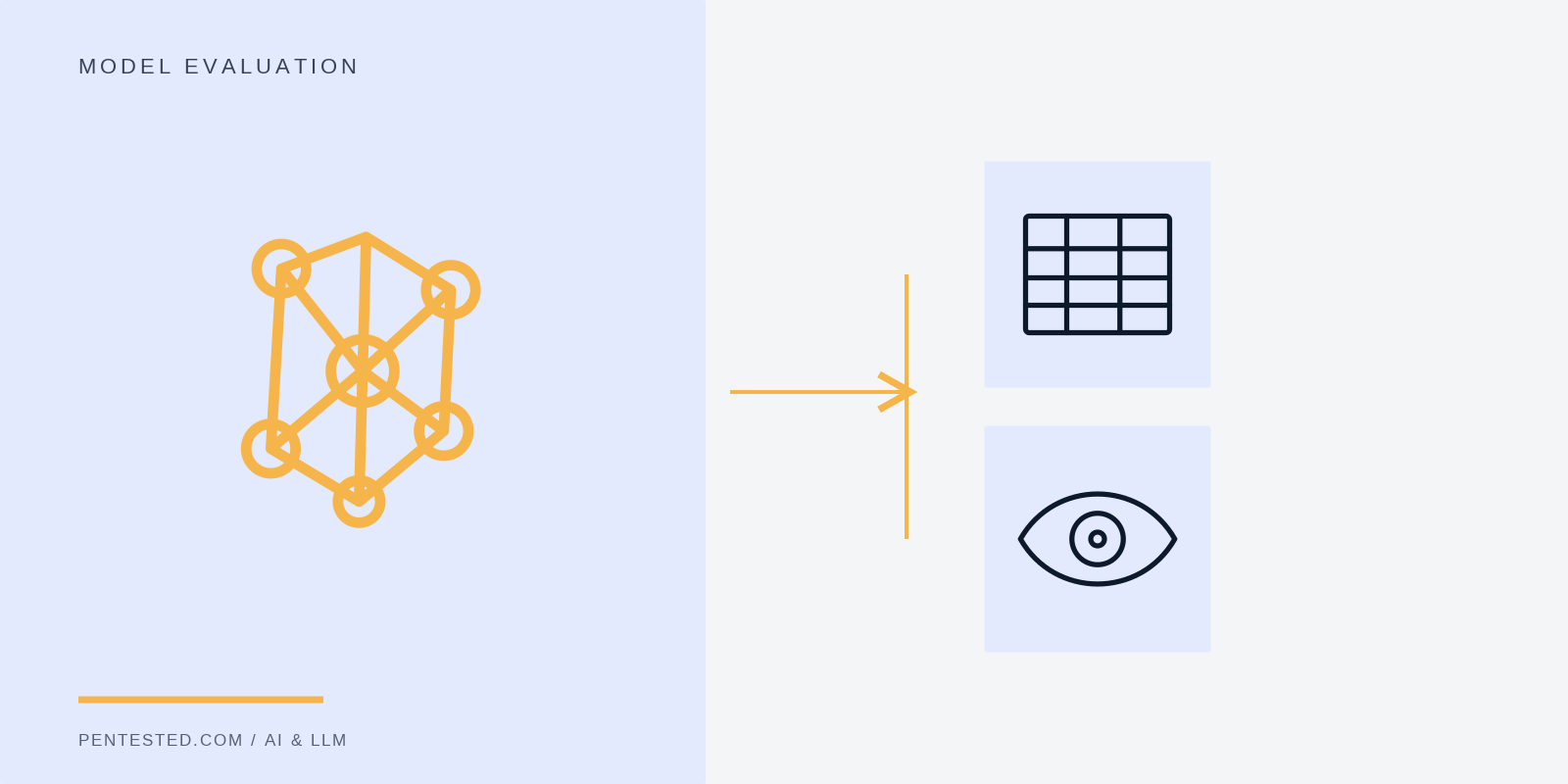
Repeated application queries can reveal enough model behaviour to support unauthorised replication or extraction. Understanding model behaviour through application queries helps establish which security property the feature needs and where that property is actually enforced.
What does this involve?
An AI model can interpret instructions within information that the application intended to treat as data. The critical security boundary is the surrounding system: which private information it supplies and which actions it allows model-directed output to trigger.
The first step is to create a labeled dataset by querying the target model with your training data. The model's predictions will serve as the labels for training your surrogate model.
Using the dataset acquired in Step 1, train a simple surrogate model. The goal is to see if a standard, off-the-shelf model can effectively mimic the target model's behaviour.
Why it matters
Consider a realistic failure: a public endpoint permits unbounded high-volume querying of a commercially sensitive model.
A strange response becomes a security issue when it discloses protected information, changes an authorised task or causes an unintended operation. The assessment should distinguish those consequences from cosmetic changes to the model's answer.
AI testing needs recorded model and application conditions because outputs can vary. The important evidence is the protected information, decision or tool operation affected in the deployed workflow.
How penetration testers check for it
Assess accessible outputs, query limits and realistic extraction impact.
- Dataset: A representative dataset for querying the model. For a classification model, this would be a set of inputs (e.g., text samples, images). The dataset should be split into a training set (for querying) and a test set (for evaluation).
- Repeat representative cases under recorded conditions.
- Verify actual data access and consequential actions.
How to fix it
Constrain unnecessary output and access and monitor abusive querying without claiming perfect secrecy.
- Keep security decisions in trusted application controls.
- Limit model context and tool permissions to the task.
- Treat generated output as untrusted input to downstream systems.
- Maintain regression cases for important trust boundaries.
No prompt wording can establish an absolute instruction boundary for every possible input. Layered application controls are needed so a model failure does not automatically become a protected action.
Recheck the changed behaviour against the original failure conditions and the legitimate user journey. Keep enough evidence to show which release and configuration were verified, and include related entry points that depend on the same security decision.
Related issues
- Adversarial inputs and evasion of AI model decisions
- Poisoned training datasets and AI backdoor behaviour
- Model inversion and reconstruction of sensitive training information
Read about our methodology or contact pentested.com to discuss your AI applications and agent workflows.