AI hallucinations, misinformation and unreliable decisions
Fluent AI output can be factually wrong and still appear authoritative. Understanding AI hallucinations and misinformation and unreliable decisions helps establish which security property the feature needs and where that property is actually enforced.
What does this involve?
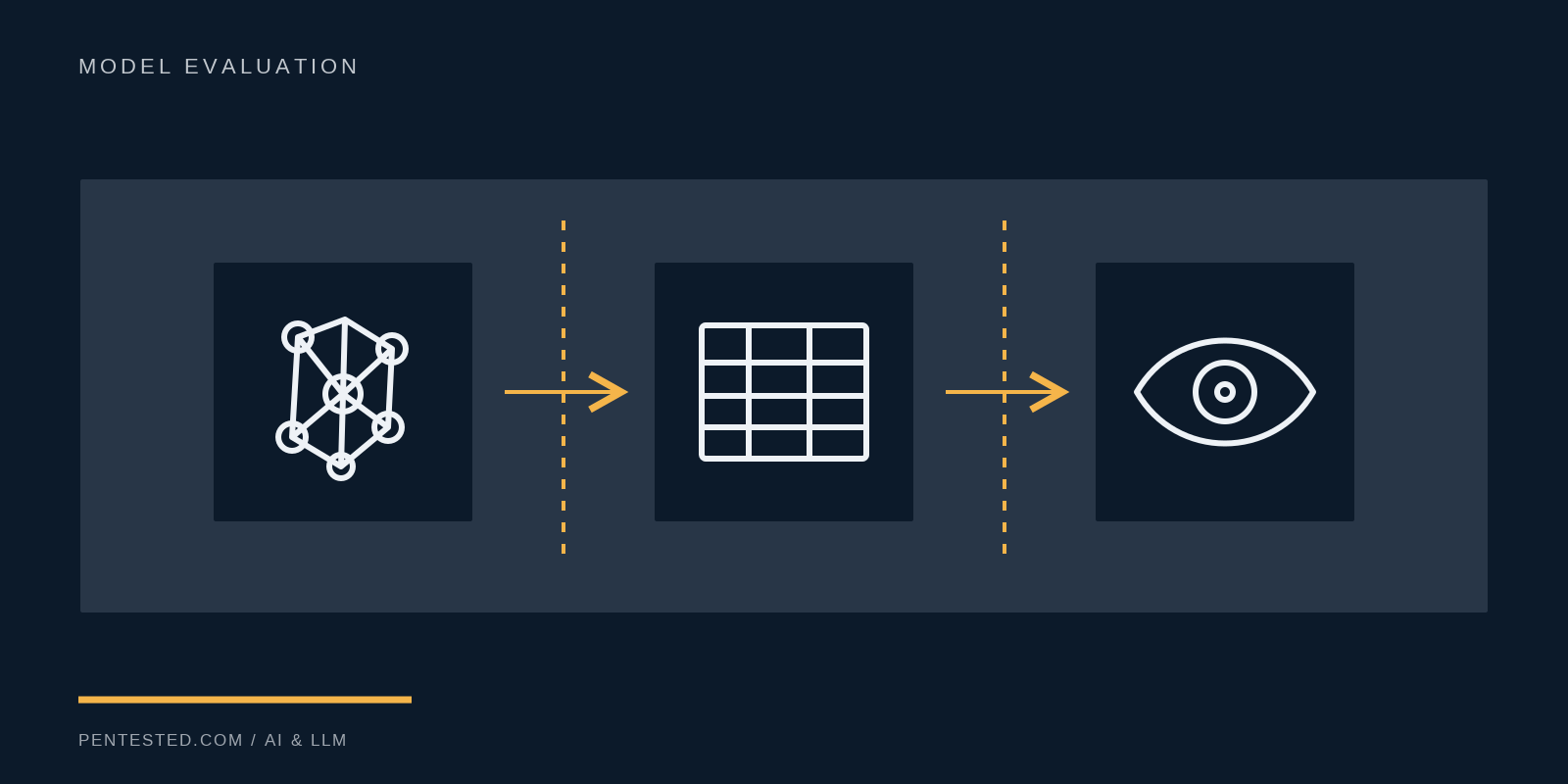
Model evaluation needs representative inputs and evidence of the decisions or behaviours the deployed system relies on. Aggregate accuracy can hide a targeted failure, a poorly represented user group or a meaningful change after an update.
Hallucination can be measured considering multiple dimensions. In this case, we are mainly considering two (out of the three) dimensions introduced in the Phare benchmark created by Giskard:
Factuality and Misinformation: the tendency to present false content as true, including sensitivity to prompt formulation and framing. Debunking: the ability to resist or refute false claims, including conspiracy theories, pseudoscientific beliefs, or widely held misconceptions.
Why it matters
Consider a realistic failure: a business workflow acts on a fabricated policy statement supplied by an assistant.
The effect of a model weakness depends on its position in a real workflow. A wrong prediction can range from a minor inconvenience to an unsafe or unauthorised decision when other components trust it without appropriate checks.
AI testing needs recorded model and application conditions because outputs can vary. The important evidence is the protected information, decision or tool operation affected in the deployed workflow.
How penetration testers check for it
Check grounding, source support and how uncertain output reaches decisions or tools.
- Detect instances where AI-generated outputs include incorrect or fabricated information.
- Identify the conditions or contexts in which hallucinations most frequently occur.
- Record model versions, settings and repeated outcomes.
- Connect failures to actual downstream decisions and capabilities.
How to fix it
Use verification and human review where needed and constrain actions based on unsupported claims.
- Control data and model provenance and changes.
- Evaluate relevant robustness and privacy properties.
- Use independent safeguards for consequential decisions.
- Re-run regression coverage after model and deployment changes.
A single unusual output rarely supports a broad claim about a model. Evidence should describe the conditions, repeatability and practical consequence without implying certainty beyond the observed result.
Recheck the changed behaviour against the original failure conditions and the legitimate user journey. Keep enough evidence to show which release and configuration were verified, and include related entry points that depend on the same security decision.
Related issues
- Explainability and evidence for AI-assisted decisions
- Adversarial inputs and evasion of AI model decisions
- Over-reliance on AI recommendations and missing human checks
Read about our methodology or contact pentested.com to discuss your AI applications and agent workflows.